

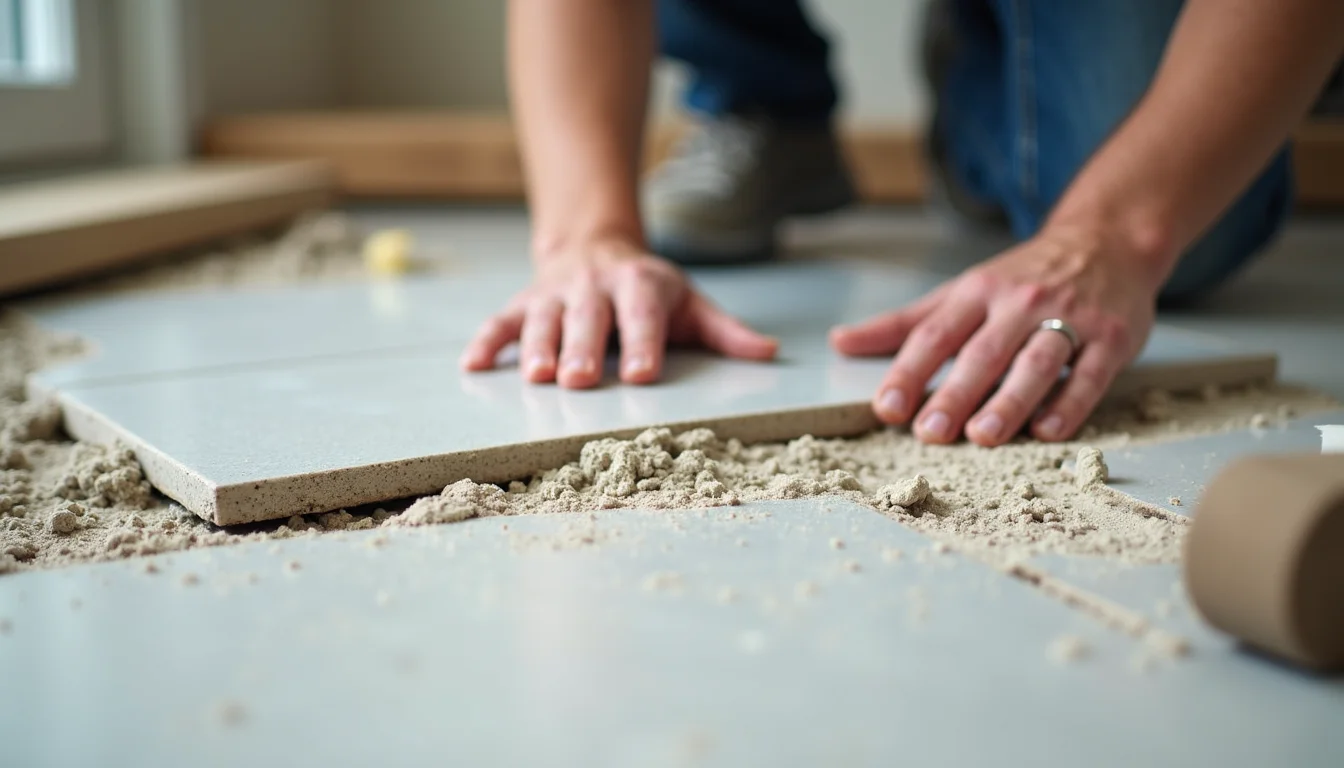
Thinking about laying ceramic tile yourself? You are not alone. Many homeowners tackle this project to save money and get exactly the look they want. But one wrong move can lead to cracked tiles or an uneven floor.
The truth is, with the right prep and patience, you can do it. This guide covers the essential steps to install a ceramic tile floor that lasts. No confusing jargon, just practical know-how.
DIY ceramic tile flooring: what you really need to know before you start
Your subfloor is the foundation of a successful tile job. For wood subfloors, you must install a cement backer board or an uncoupling membrane like Ditra. This prevents cracks from floor movement. Skipping this step is the number one DIY mistake.
You also need the right tools: a notched trowel, tile cutter, spacers, level, and rubber mallet. A manual snap cutter works for straight cuts on ceramic tile. For porcelain or complex shapes, rent a wet saw. Always order 10% extra tile for waste and cuts.
Transform Your Home with DIY Ceramic Tile Flooring
Laying ceramic tile flooring yourself is achievable. This guide breaks down the process simply. You can get a professional look without the high cost.
Follow these steps carefully. You will gain confidence and a beautiful new floor. It is a rewarding project for any homeowner.
| Estimated Time | Cost (USD) | Difficulty Level |
| 2-3 Days | $3 – $10 per sq ft | Intermediate |
Necessary Materials
- Ceramic tiles (10% extra for cuts)
- Thin-set mortar
- Grout
- Tile spacers (1/4 inch)
- Leveling compound (if needed)
- Cement backer board or uncoupling membrane (for wood subfloors)
- Notched trowel (size appropriate for tile)
- Rubber grout float
- Tile cutter (snap cutter or wet saw)
- Rubber mallet
- Buckets
- Sponges
- Knee pads, safety glasses, gloves
The Definitive Step-by-Step
- Prepare the Subfloor – Ensure it is clean, level, and solid. Add a backer board if needed.
- Plan Your Layout – Dry lay tiles to check the pattern. Avoid small cuts at edges.
- Mix Thin-Set Mortar – Combine with water to a peanut butter consistency. Let it rest.
- Apply Mortar to Floor – Use the flat side of the trowel, then comb with the notched side.
- Set the First Tile – Place it firmly with a slight wiggle. Ensure it is level.
- Continue Laying Tiles – Use spacers for consistent grout lines. Check for lippage often.
- Cut Tiles as Needed – Use a snap cutter for straight lines or a wet saw for curves.
- Allow Mortar to Cure – Wait at least 24 hours before walking on the tiles.
- Remove Spacers – Take out all plastic spacers from the grout lines.
- Mix and Apply Grout – Spread evenly with a rubber float at a 45-degree angle.
- Clean Excess Grout – Wipe with a damp sponge after 15-20 minutes.
- Buff Off Grout Haze – Use a dry cloth once a light haze appears.
Common Execution Mistakes
- Not preparing the subfloor properly, leading to cracks.
- Using the wrong trowel size, causing poor mortar adhesion.
- Not leaving an expansion gap around the perimeter of the room.
Preparing the Subfloor for Tile
A solid foundation is critical for successful home tile installation. The subfloor must be rigid and flat. Unevenness will transfer to the tiles, causing them to crack or grout lines to widen. Use leveling compound for low spots and ensure any wood subfloors have an appropriate underlayment.
Read also: Ceramic Tile Flooring: The Wood Look Without the Worry
Choosing the Right Ceramic Tile
Consider the tile’s PEI rating for durability in high-traffic areas. Porcelain tiles are denser and more water-resistant than standard ceramic. Large format tiles can make a room feel bigger but require a very flat subfloor and precise installation.
Laying Out Tile Patterns
A dry run layout is essential for how to lay ceramic tile floor. This lets you visualize the final look and adjust the starting point. Aim for full tiles or symmetrical cuts along walls. Avoid narrow slivers of tile, which are difficult to cut and look unprofessional.
Mixing Thin-Set Mortar
Follow the manufacturer’s instructions precisely. The ideal consistency is like thick peanut butter. It should hold its shape on the trowel without slumping. Too much water weakens the bond, while too dry makes it hard to spread.
Cutting Tiles with a Wet Saw
A wet saw is necessary for porcelain or intricate cuts. Always wear safety glasses and keep the water reservoir full. Cut slowly and steadily, letting the saw do the work. This tool is key for achieving clean edges and custom shapes.
Setting Tiles in Mortar
Apply mortar to a small section at a time. Comb it with the notched trowel at a consistent angle. Press tiles into the mortar with a slight twisting motion. This ensures full coverage on the back of the tile, preventing hollow spots.
Applying Grout Between Tiles
Use a rubber grout float to press grout into the joints. Work at a 45-degree angle to fill the space completely. Remove excess grout promptly to avoid difficult cleanup later.
Sealing Grout and Finishing
Once the grout cures (usually 24-72 hours), apply a quality grout sealer. This protects it from stains and moisture. Buff any remaining grout haze with a soft, dry cloth for a polished finish.
For more details on tools and materials, check out Lowe’s tiling guide. Learn about achieving a symmetrical layout at Rubi’s blog. Get beginner tips from DIY Tyler.
Pro Tips for a Flawless Finish
What to Avoid
- Skipping the dry layout. It prevents awkward small cuts at walls.
- Using the wrong trowel notch size. This leads to poor adhesion.
- Walking on fresh tiles. Wait the full cure time.
Step-by-Step Quick Recap
- Prepare subfloor: clean, level, and install underlayment if needed.
- Dry lay tiles to plan pattern and cuts.
- Mix thin-set to peanut butter consistency.
- Apply mortar with notched trowel, set tiles with twist, use spacers.
- Let mortar cure 24 hours, then grout at 45° angle.
- Clean haze with damp sponge, buff dry.
Frequently Asked Questions
How long does thin-set take to dry before grouting?
Standard thin-set requires at least 24 hours of cure time. Check manufacturer instructions; humidity and temperature affect drying.
Can I lay tile directly on plywood?
No, plywood expands and contracts, causing cracks. Use cement backer board or an uncoupling membrane for a stable base.
How do I cut tiles around outlets?
Measure and mark the outlet box location on the tile. Use an angle grinder with a diamond blade for precise cutouts.
Laying your own ceramic tile floor is a rewarding project that saves money and adds value to your home. With the right preparation and patience, you can achieve professional results.
Now that you know the process, gather your tools and start with a small area like a bathroom or entryway. Practice builds confidence for larger rooms.
In 2026, DIY tiling is more accessible than ever with advanced tools like laser levels and self-leveling compounds. Your home can reflect your style without breaking the bank.
