

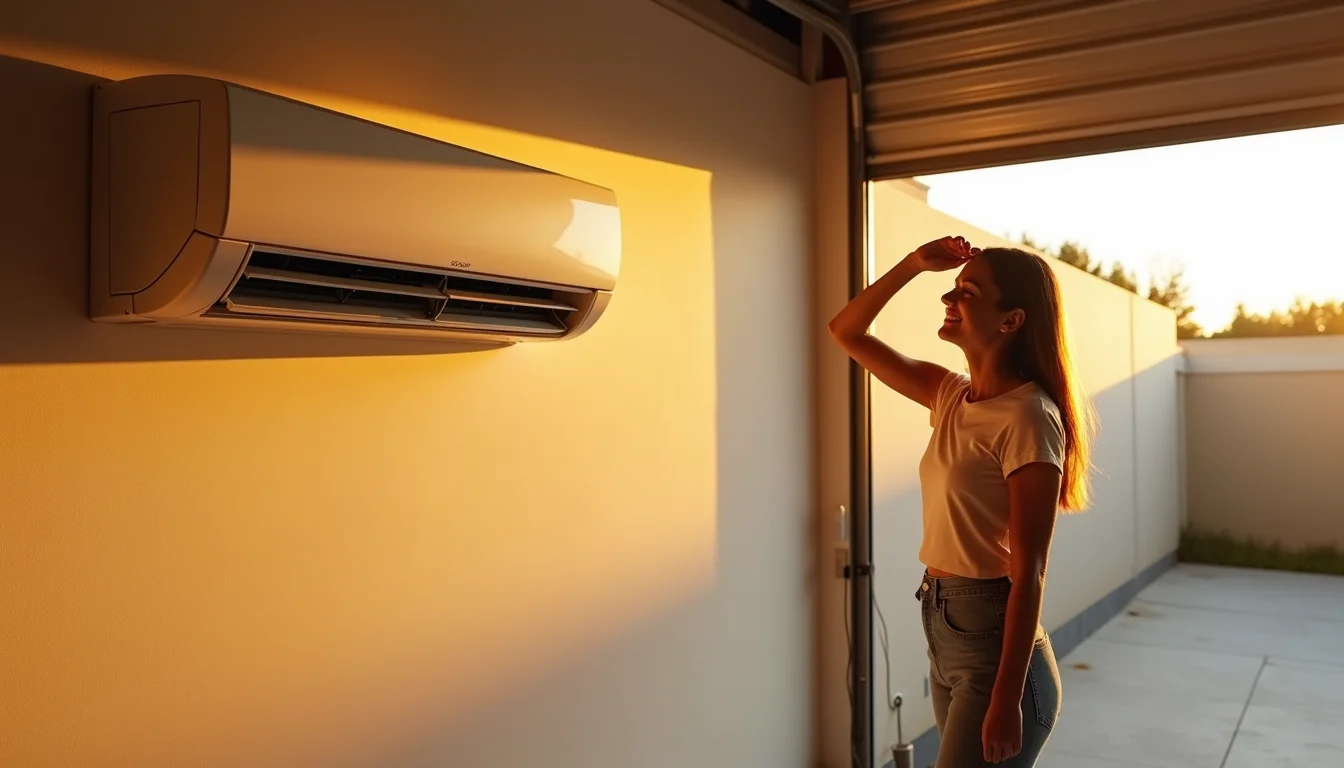
Tired of sweating through summer in your garage or home addition? Standard HVAC systems can be expensive and require ductwork that just isn’t possible in some spaces. A mini split system offers a powerful solution that heats and cools without any ducts at all.
These ductless systems are changing how American homeowners handle comfort in tricky spaces. They install quickly, run quietly, and can save you money on energy bills. Let’s look at what makes a mini split a smart choice for your home.
Why Choose a Ductless Mini Split System for Your Home
A ductless mini-split system, also called a mini-split heat pump, gives you both heating and cooling from one unit. It connects an outdoor compressor to one or more indoor air handlers using refrigerant lines and electrical wiring. This setup means you don’t need to install expensive ductwork.
These systems are perfect for room additions, garages, or older homes where adding ducts is hard or impossible. You get zoned comfort, so you can set different temperatures in different rooms. Many units, like those from MRCOOL and Senville, come with high SEER2 ratings over 20 and are Energy Star certified.
BTU capacity matters for proper coverage. A 9,000 BTU unit works for up to 400 square feet, while a 12,000 BTU unit covers up to 550 square feet. Prices for a 12,000 BTU model range from about $850 to over $2,300 at stores like Home Depot and Lowe’s. Some models, such as the MRCOOL DIY series, are designed for homeowners to install themselves.
Ditch the Ducts: The Mini-Split Revolution is Here
![[object Object]](https://img.homedecorati.com/2026/mini-split-0.jpg)
Tired of inefficient heating and cooling? Ductless mini-split systems are changing the game for American homes. They offer a smart, flexible way to control your home’s temperature without the hassle and expense of traditional ductwork. Imagine perfect comfort in every room, exactly when you need it.
These systems are incredibly efficient, often earning Energy Star certification. This means lower energy bills and a more comfortable home environment year-round. They are perfect for additions, garages, or older homes where adding ducts is just not practical. Let’s explore why mini-splits are the future of home comfort.
| Feature | Details |
|---|---|
| Type | Ductless Mini-Split System / Heat Pump |
| Key Advantage | No traditional ductwork required, zoned comfort |
| Energy Efficiency | High SEER2 ratings (often >20), Energy Star certified |
| Installation Flexibility | Ideal for additions, garages, older homes |
| BTU Capacity Example | 9,000 BTU for up to 400 sq. ft., 12,000 BTU for up to 550 sq. ft. |
| Cold Climate Performance | Some models heat effectively down to -22°F (-30°C) |
| Estimated Cost (12,000 BTU) | $850 – $2,300+ |
| Brands Mentioned | MRCOOL, Senville, Trane |
Energy Efficiency of Mini Split Systems
Mini-split systems are champions of energy efficiency. Their ductless design eliminates energy loss common with traditional ducted systems. This means less wasted energy and lower electricity bills for you. Many units boast high SEER2 ratings, often exceeding 20, and are Energy Star certified, confirming their superior performance.
Read also: Why your vacuuming isn’t working (and how to fix it)
This efficiency translates directly into savings. You’re not paying to heat or cool empty spaces or lose conditioned air through leaky ducts. The zoned comfort feature further enhances this, allowing you to set different temperatures in different rooms. This smart approach to climate control significantly reduces overall energy consumption.
Mini Split Installation Tips
![[object Object]](https://img.homedecorati.com/2026/mini-split-1.jpg)
Installation is a key consideration for mini-split systems. While some DIY-friendly models exist, like the MRCOOL DIY series, professional installation is often recommended for optimal performance and longevity. A certified technician ensures proper refrigerant line connection and electrical setup.
Proper sizing is critical. Consult the BTU capacity guidelines based on your room’s square footage. An undersized unit will struggle to keep up, while an oversized unit can short-cycle, reducing efficiency and comfort. Always factor in ceiling height and insulation levels for accurate sizing.
For optimal performance and to maintain warranty, professional installation is strongly advised for most mini-split systems.
Ductless Mini Split for Small Spaces
Ductless mini-splits are an excellent solution for smaller homes, apartments, or specific areas like a home office or garage. Their compact design and flexible installation make them ideal where traditional HVAC is not feasible or cost-effective. You get powerful heating and cooling without dedicating significant space.
Read also: Mini Split AC: The Quiet Way to Cut Your Energy Bills by 30%
These systems provide targeted comfort for individual rooms or zones. This is far more efficient than running a large central system for a small area. It ensures you only condition the space you are actively using, leading to substantial energy savings.
Mini Split vs Central Air Conditioning
![[object Object]](https://img.homedecorati.com/2026/mini-split-2.jpg)
The primary difference lies in the ductwork. Central AC relies on a network of ducts to distribute air, which can be costly to install and prone to energy loss. Mini-splits, being ductless, bypass this entirely. They connect an outdoor unit to one or more indoor units via small refrigerant lines.
Mini-splits offer superior zoned control, allowing for individual temperature settings in each room. Central AC typically offers less granular control. For homes without existing ductwork, a mini-split is often a more practical and cost-effective installation choice than retrofitting ducts for central air.
Mini Split Heat Pump Benefits
Mini-split systems function as heat pumps, providing both heating and cooling. This dual functionality makes them a versatile all-in-one solution for year-round comfort. They are highly efficient at transferring heat, even in colder temperatures.
Modern mini-split heat pumps are engineered for performance in harsh climates. Some models, like those from Senville, can provide effective heating even when outdoor temperatures drop to -22°F (-30°C). This makes them a reliable primary heating source in many regions of the US.
Multi Zone Mini Split Systems
For larger homes or areas requiring multiple independent climate zones, multi-zone mini-split systems are the answer. A single outdoor unit can connect to multiple indoor air-handling units, typically up to five. This allows for customized temperature control in each designated zone.
This flexibility is a major advantage. You can set different temperatures for bedrooms, living areas, and workspaces according to occupancy and preference. This granular control maximizes comfort while minimizing energy waste, a significant benefit for busy households.
Multi-zone systems offer unparalleled flexibility, allowing you to tailor comfort to each specific area of your home.
Mini Split Maintenance and Cleaning
Regular maintenance is key to keeping your mini-split system running efficiently. The most common task is cleaning the air filters in the indoor units. These filters trap dust and debris, preventing them from circulating in your home.
Clean these filters monthly during peak usage seasons. Simply remove them, wash with mild soap and water, let them dry completely, and reinsert. For deeper maintenance, like checking refrigerant levels or cleaning coils, professional servicing is recommended annually.
Smart Controls for Mini Splits
Many newer mini-split models come equipped with smart technology. This includes Wi-Fi connectivity and compatibility with smart home assistants like Alexa. You can control your system remotely via a smartphone app or voice commands.
This convenience allows you to adjust temperatures before you arrive home or turn off a unit in an unused room. Smart controls enhance energy management and provide greater convenience. They integrate seamlessly into a modern, connected home environment.
The Future is Ductless: Your Expert Verdict for 2026
Mini-split systems are no longer a niche product; they are a mainstream solution for efficient and flexible home comfort. Their ability to provide zoned climate control without ductwork makes them ideal for the evolving needs of American homeowners, from new builds to renovations.
By 2026, expect to see even greater advancements in efficiency, smart features, and cold-climate performance. The cost-effectiveness, combined with significant energy savings, positions mini-splits as a smart investment for nearly any home. They offer superior comfort and control, making them a clear winner in today’s HVAC market.
Read also: HVAC installation cost in 2026: what you’ll actually pay
Your Mini Split Quick Guide
Step 1: Measure Your Space
Calculate the square footage of the room you want to cool. For a 12,000 BTU unit, aim for rooms up to 550 square feet.
Step 2: Choose the Right Type
Decide between a single-zone or multi-zone system. Single-zone works best for one room, while multi-zone covers multiple areas with one outdoor unit.
Step 3: Plan Installation
Check if you need a professional or if a DIY model like MRCOOL fits your skill level. Always verify local electrical codes before starting.
Frequently Asked Questions
Can I install a mini split myself?
Yes, some models like MRCOOL DIY are designed for self-installation with pre-charged lines. However, most units require a licensed HVAC technician for proper setup.
How much does a mini split cost to run?
A 12,000 BTU unit with a SEER2 rating of 20 costs about $0.30 per hour to operate. Actual costs vary by local electricity rates and usage.
Do mini splits work in cold climates?
Many modern mini splits, like Senville units, provide efficient heating down to -22°F. They use heat pump technology to extract warmth from outdoor air.
A mini split is a smart investment for efficient, flexible comfort in your home. With high SEER2 ratings and zoned control, you save money and energy.
Next, measure your room and compare BTU capacities to find the perfect fit. Then, choose between DIY or professional installation based on your comfort level.
Imagine a quiet, cool bedroom in summer and warm, cozy living room in winter—all with a sleek wall-mounted unit. That’s the future of home comfort.
