

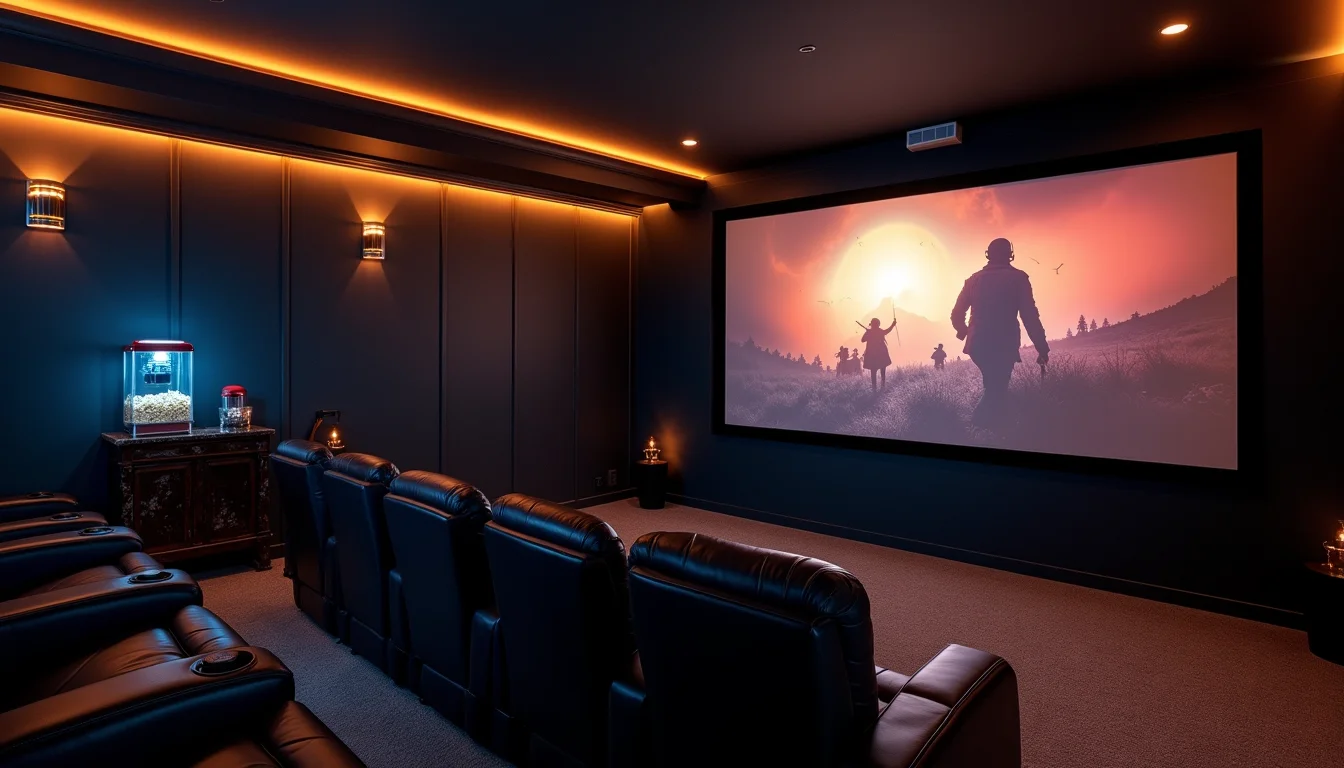
You saved up for a big screen and a killer sound system. But your room still feels like a regular living room, not a theater. The secret isn’t the gear — it’s how you decorate the space.
Dark walls, smart lighting, and the right seating can turn any room into a true escape. You don’t need a huge budget or a dedicated room. You just need to know a few simple tricks that make all the difference.
Home Cinema Room Design: Start With the Walls and Light
Your walls are the biggest factor in picture quality. Paint them a matte, dark color like charcoal or navy. This kills glare and makes the screen pop without buying a more expensive TV.
Add acoustic panels in the same dark shade. They absorb echo and clean up sound, plus they look like modern wall art. Brands like ATS Acoustics offer panels that are both effective and stylish.
For lighting, install dimmable sconces and LED strip lights behind the screen. This reduces eye strain and adds a movie theater feel. Never use overhead lights during a film — they wash out the image completely.
Luxury Home Theater Design
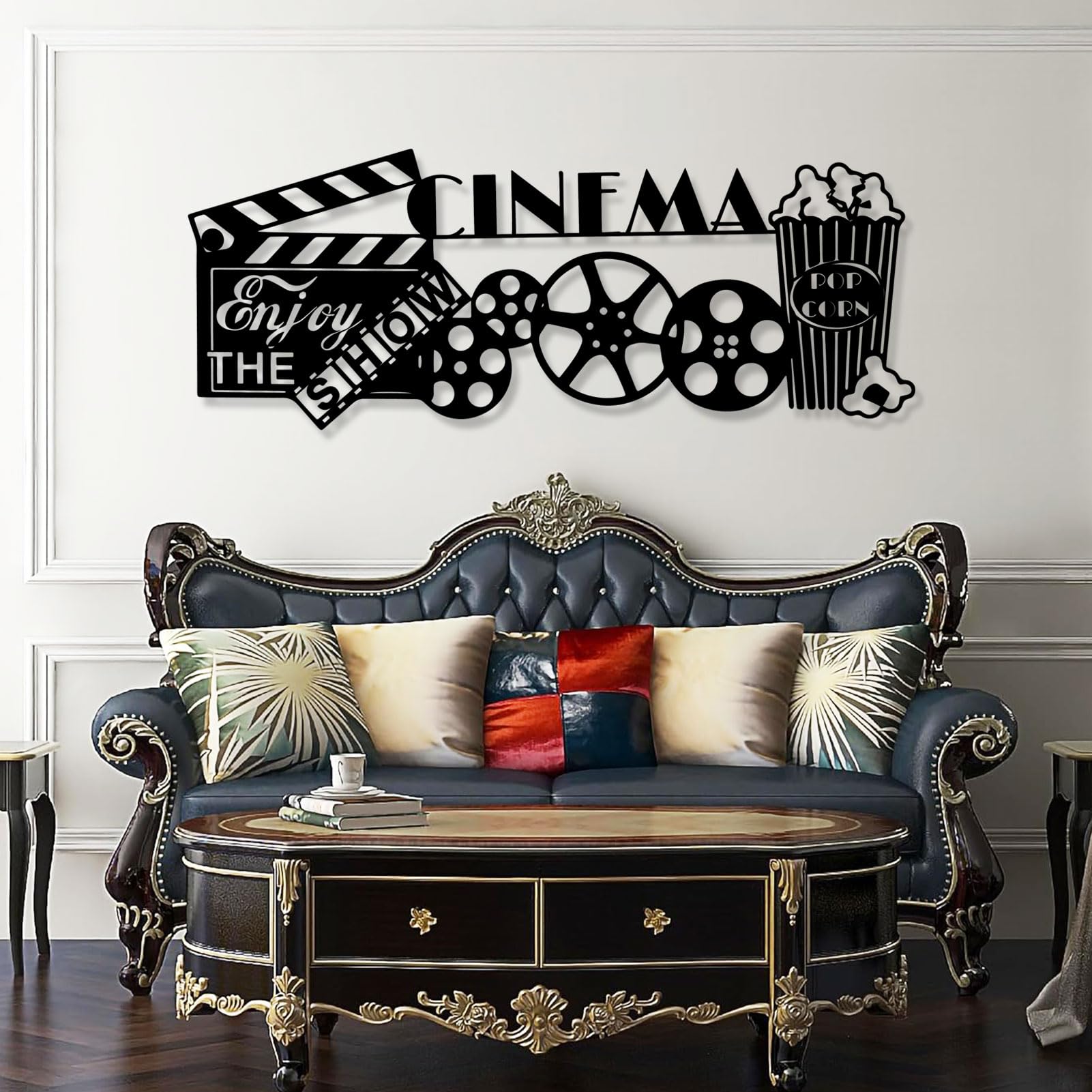
Creating a high-end home cinema room design means focusing on premium materials and sophisticated aesthetics. This approach elevates the viewing experience beyond the ordinary.
Velvet Upholstery
Plush velvet seating offers unparalleled comfort and a classic, opulent feel. It also helps absorb sound, contributing to better acoustics in your media room ideas.
Dark Wood Paneling
Rich, dark wood like mahogany or walnut adds a sense of gravitas and warmth. This material is excellent for wall treatments, enhancing the overall ambiance of a luxury home theater.
Read also: 45 Christmas Light Decor Ideas for a Festive Home on a Budget
Brass Accents
Polished brass fixtures, from light sconces to decorative trim, introduce a touch of glamour. These elements reflect light subtly, adding depth without causing glare on the projector screen.
Custom Bar Setup
A dedicated home theater snack bar setup with a marble countertop and integrated mini-fridge is a hallmark of luxury. It provides convenience and enhances the entertainment experience for guests.
| Material | Finish | Cost Estimate (per sq ft) |
| Mahogany Wood | Polished | $30 – $60 |
| Brass | Polished | $50 – $100 (per fixture) |
| Marble | Honed | $75 – $150 |
Small Home Theater Ideas
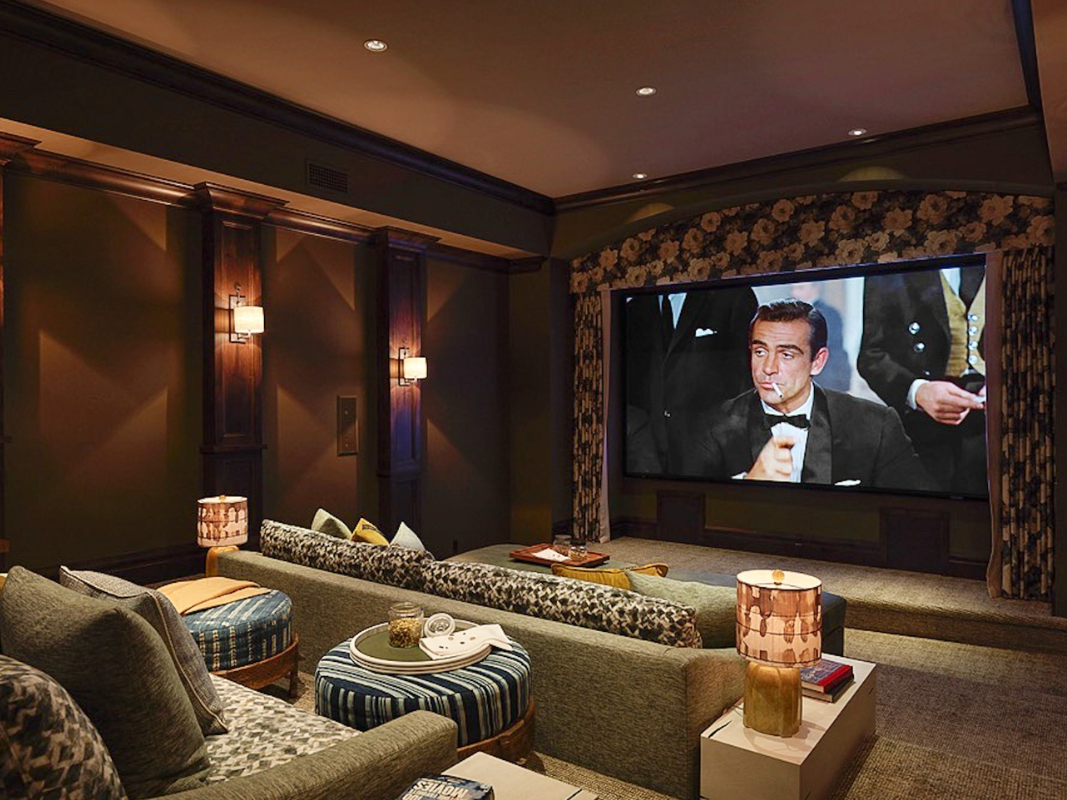
Even compact spaces can become engaging movie rooms with smart design choices. The goal is to maximize functionality and visual appeal without feeling cramped.
Modular Sectionals
Opt for a modular sectional sofa that can be reconfigured to fit your specific layout. This flexibility is key for small home theater ideas, allowing for different seating arrangements.
Read also: 50 Behind TV Wall Decor Ideas to Upgrade Your Room Fast
Wall-Mounted Shelving
Utilize vertical space with sleek, wall-mounted shelves for media equipment and decor. This keeps the floor clear, making the room feel larger and more open.
Integrated Lighting
Incorporate recessed or cove lighting that can be dimmed to set the mood. Good home theater lighting ideas are crucial for creating an immersive atmosphere in any size room.
Dark Matte Paint
A dark, matte paint color on the walls absorbs light, reducing reflections and improving screen contrast. This is a simple yet effective technique for any small home theater.
Basement Home Theater Setup
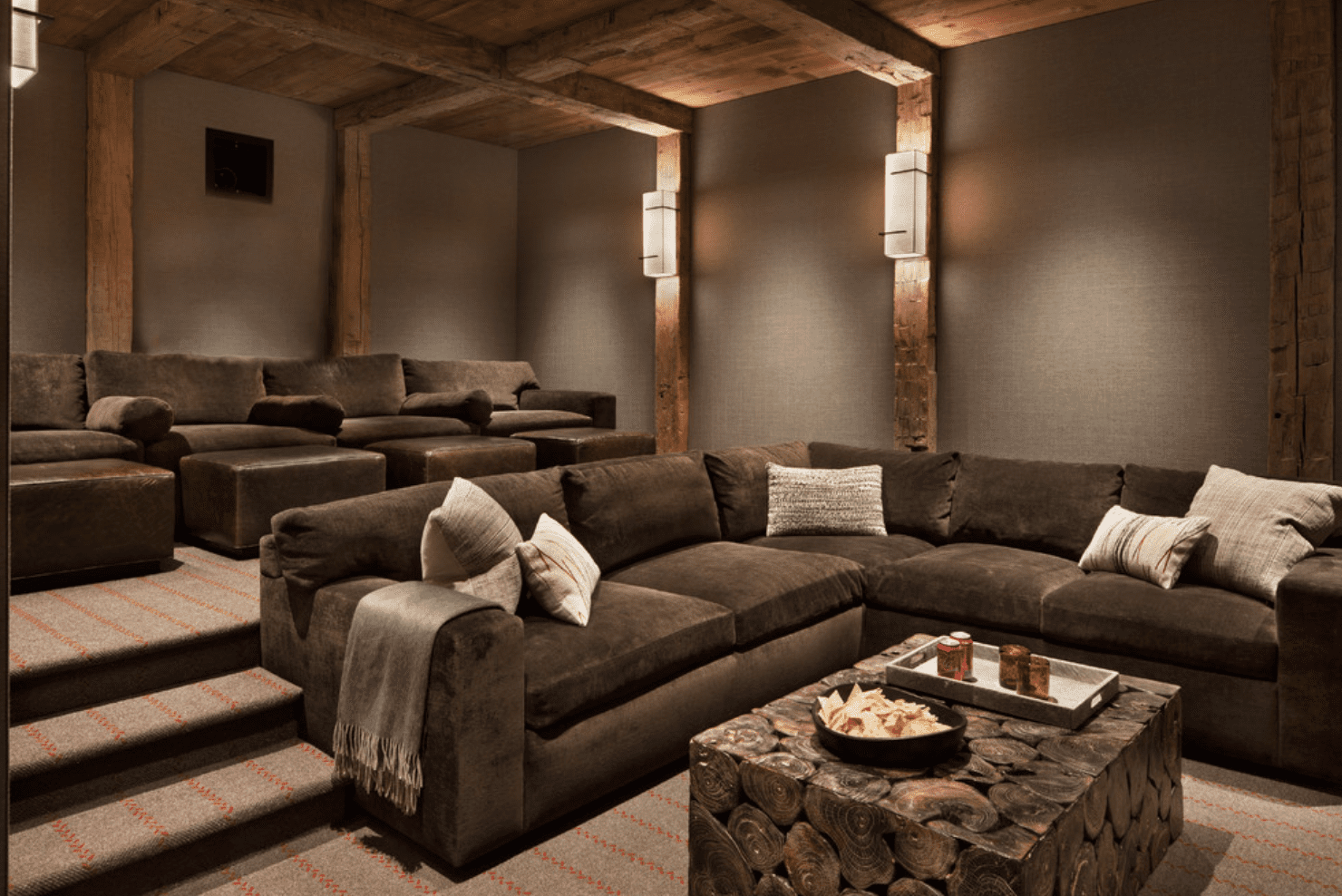
Basements offer a blank canvas, ideal for a dedicated home cinema room design. Their typically enclosed nature provides excellent opportunities for soundproofing and light control.
Acoustic Wall Panels
Install fabric-wrapped acoustic panels on the walls to manage sound reflections and improve audio clarity. These panels are a vital part of home theater soundproofing solutions.
Tiered Seating Platforms
If ceiling height allows, build a small platform to elevate the back row of seating. This ensures everyone has a clear view of the home theater projector screen.
Low-Profile Furniture
Choose furniture that doesn’t overwhelm the space, like low-profile recliners or comfortable floor cushions. This maintains an open feel in your basement home theater.
Ambient Lighting
Use dimmable sconces or LED strip lighting along the floor or ceiling coves. Effective home theater lighting ideas are essential for setting the right mood and ensuring safe navigation.
Soundproofing Insulation
Add extra insulation in the walls and ceiling during construction or renovation. This is a fundamental step for effective home theater soundproofing, preventing sound leakage.
| Element | Material | Benefit |
| Walls | Mass-loaded vinyl, Drywall | Sound blocking |
| Ceiling | Acoustic tiles, Insulation | Sound absorption |
| Flooring | Thick carpet | Sound dampening |
Vintage Cinema Decor
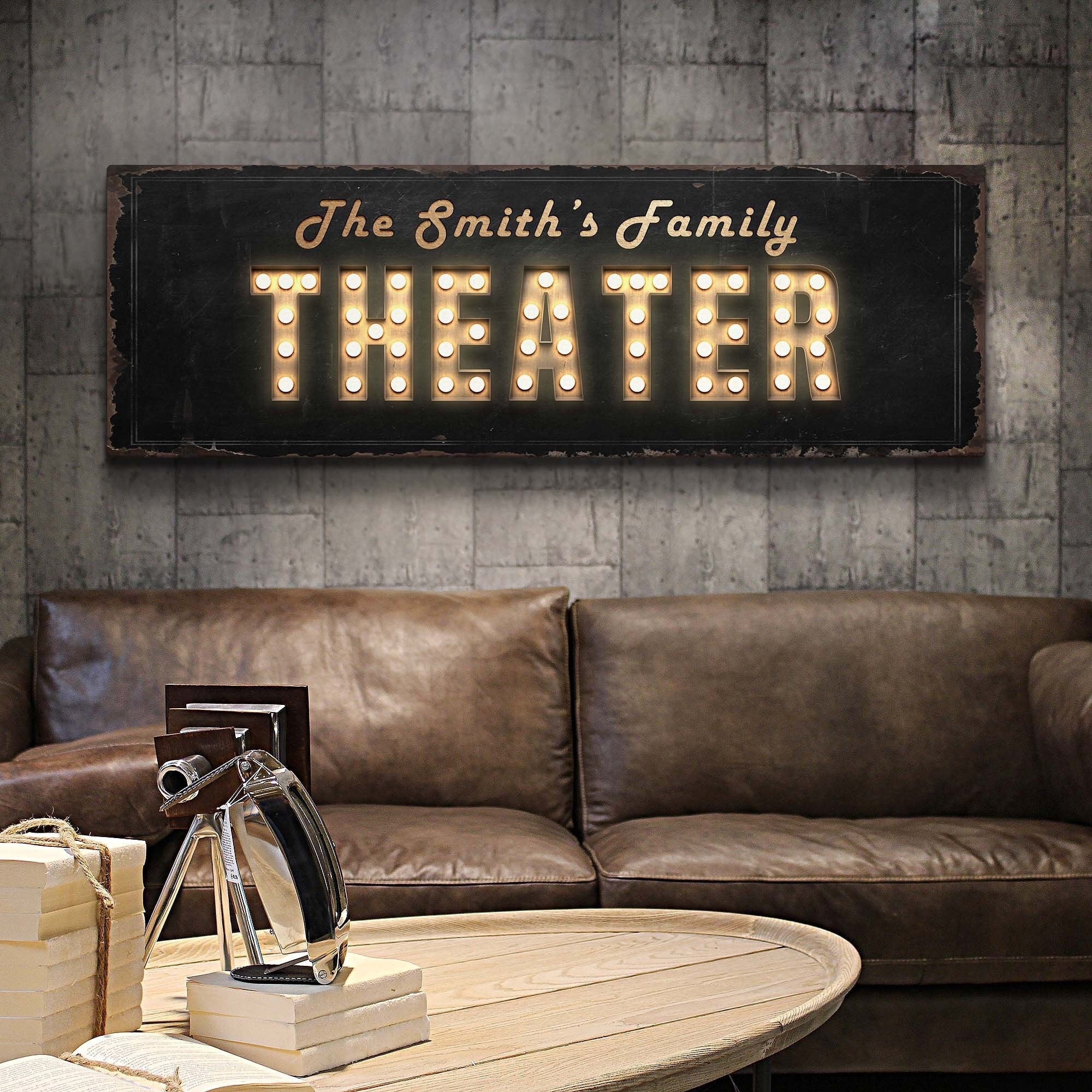
Embrace a nostalgic feel with decor inspired by classic movie houses. This style focuses on timeless elegance and a touch of retro charm.
Retro Movie Posters
Frame iconic vintage movie posters to serve as striking home theater wall art. These add personality and a clear thematic focus to your space.
Marquee Lighting
Incorporate marquee-style lights, perhaps spelling out a fun phrase or the room’s name. This is a playful nod to old Hollywood glamour and a key element of vintage cinema decor.
Velvet Ropes and Stanchions
Use velvet ropes and stanchions to define areas, such as the entrance to the viewing space. This detail enhances the feeling of exclusivity and classic cinema ambiance.
Art Deco Elements
Incorporate Art Deco patterns and motifs in your furniture or accent pieces. Think geometric shapes and metallic finishes for a sophisticated vintage look.
Classic Cinema Seating
Choose plush, comfortable seating that mimics the style of old movie theaters. Consider deep red or blue fabrics for an authentic feel in your home cinema room design.
Home Theater Lighting Ideas
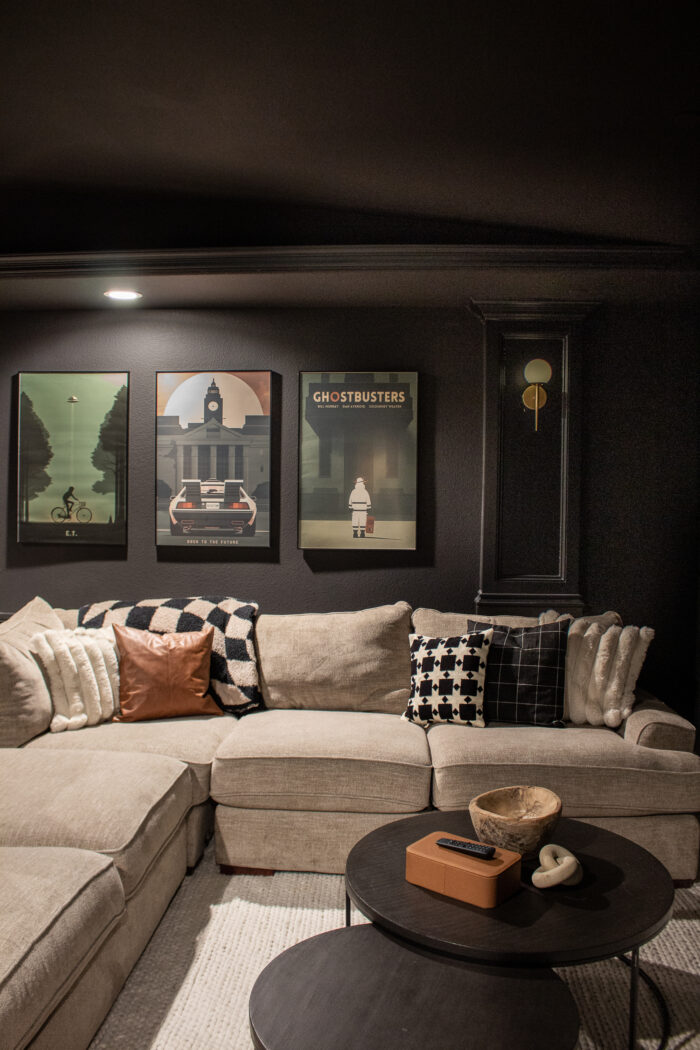
Proper lighting is crucial for both ambiance and functionality in a media room. It sets the mood and ensures a comfortable viewing experience.
Dimmable Wall Sconces
Install dimmable wall sconces on either side of the screen or along the side walls. This provides soft, indirect light that doesn’t interfere with the picture quality.
LED Strip Lighting
Use LED strip lights for cove lighting or behind the screen (bias lighting). This reduces eye strain and enhances perceived contrast, a smart choice for home theater lighting ideas.
Recessed Ceiling Lights
If using overhead lights, ensure they are on a separate dimmer circuit. This allows for task lighting when needed, such as for setting up or cleaning.
Pathway Illumination
Consider low-level floor lights or illuminated step lights if you have tiered seating. This ensures safe passage in a darkened room, a practical aspect of home theater lighting ideas.
Smart Control Systems
Integrate lighting with a smart home system for easy control via app or voice command. This adds convenience and allows for pre-set lighting scenes.
Home Theater Color Schemes
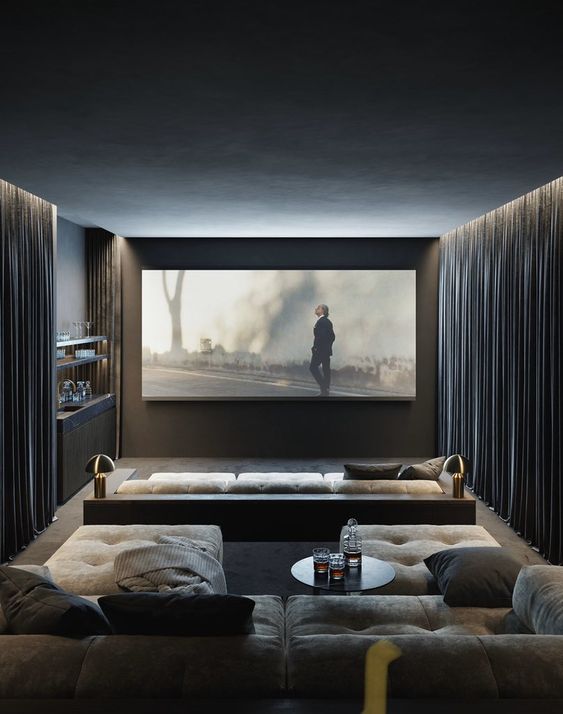
The right color palette significantly impacts the atmosphere and visual performance of your viewing space. Darker, muted tones are generally preferred for optimal viewing.
Deep Blues and Grays
Shades like navy blue, charcoal gray, or deep teal create a sophisticated and immersive environment. These colors absorb light well, enhancing screen contrast in your home cinema room design.
Earthy Tones
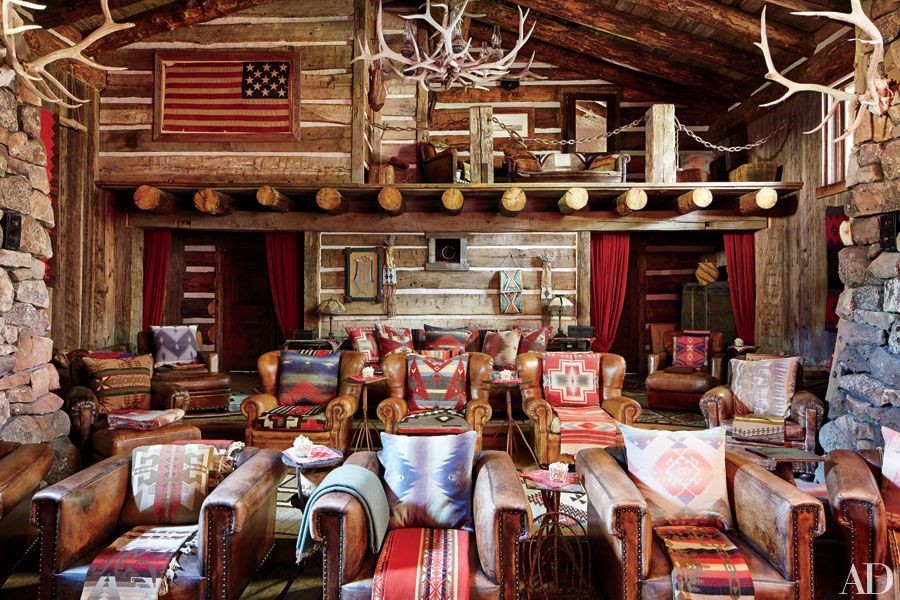
Warm browns, deep greens, and muted reds can create a cozy, inviting feel, especially for rustic home theater ideas. These colors work well with natural materials like wood and leather.
Monochromatic Schemes
A sophisticated monochromatic scheme using varying shades of a single color can create a sleek, modern look. This approach is elegant and helps maintain focus on the screen.
Accent Colors
Use brighter accent colors sparingly through decor items like cushions or artwork. This adds visual interest without distracting from the main viewing experience in your media room ideas.
| Color Family | Example Shades | Effect |
| Cool Neutrals | Charcoal, Slate, Navy | Enhances contrast, immersive |
| Warm Neutrals | Taupe, Deep Olive, Burgundy | Cozy, inviting |
| Bold Accents | Mustard Yellow, Teal | Adds visual interest |
Home Theater Seating Arrangements
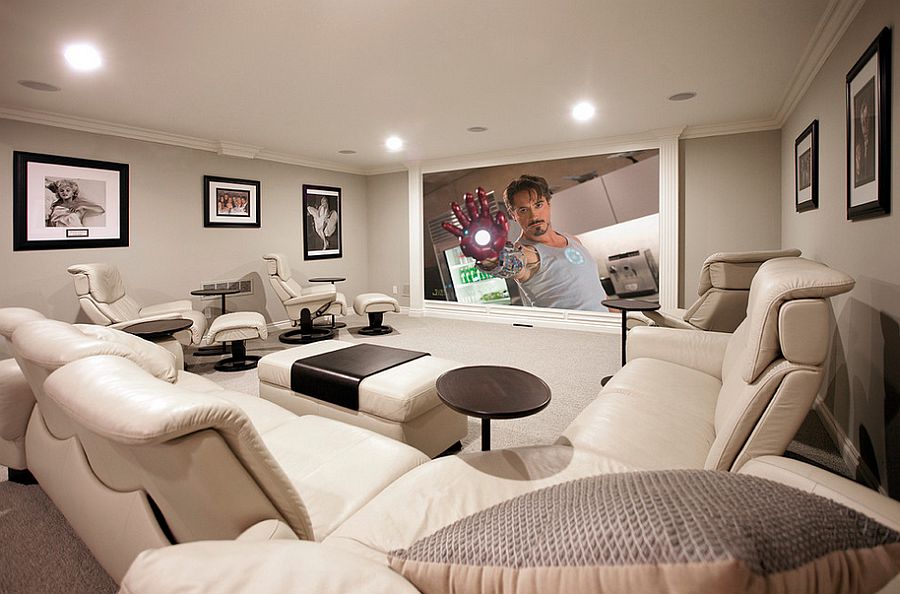
Thoughtful home theater seating arrangements are key to comfort and optimal viewing angles for everyone. Consider the size and shape of your room when planning.
Reclining Theater Seats
Individual reclining seats offer the ultimate in comfort and a true cinema feel. They are ideal for dedicated movie rooms and luxury home theater setups.
Tiered Seating
For larger rooms, tiered platforms allow for multiple rows of seating. This ensures unobstructed views of the home theater projector screen for all viewers.
Modular Sofas
Flexible modular sofas can be arranged in various configurations to suit different room layouts. This is a practical solution for small home theater ideas or multi-purpose rooms.
Floor Cushions and Beanbags
In more casual DIY home theater setups, floor cushions and beanbags can add extra, comfortable seating options. They are easy to move and store when not in use.
Viewing Distance
Ensure adequate space between rows for comfortable legroom and to avoid neck strain. Proper home theater seating arrangements prioritize the viewer’s comfort and experience.
Home Theater Soundproofing Solutions
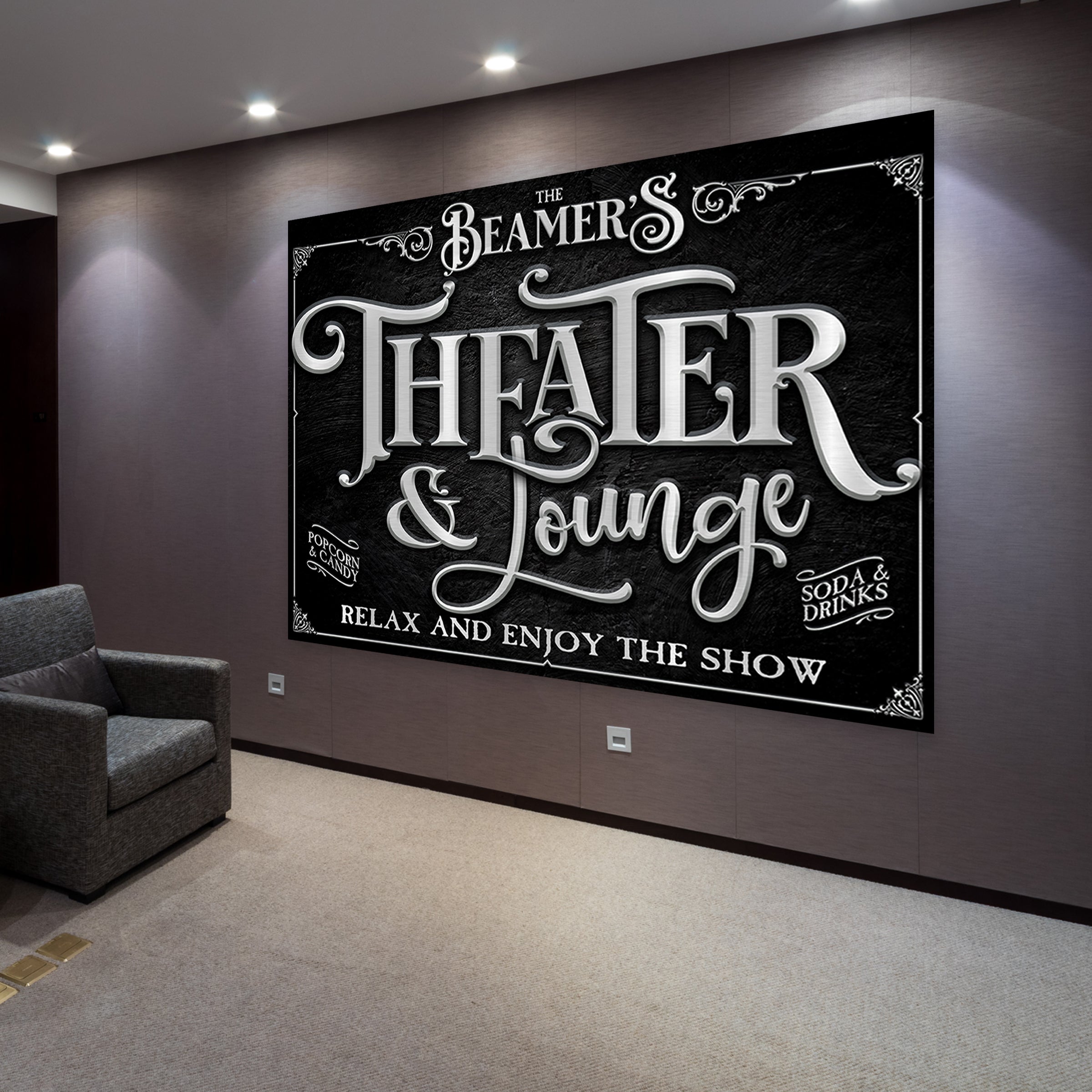
Effective home theater soundproofing is essential for an immersive audio experience and to avoid disturbing others. It involves blocking and absorbing sound.
Mass-Loaded Vinyl (MLV)
Install MLV behind drywall or directly on studs to add mass to walls and ceilings. This is a highly effective material for soundproofing, a key component of home theater soundproofing solutions.
Acoustic Drywall
Use specialized acoustic drywall, which has a damping layer between two gypsum boards. This significantly reduces sound transmission compared to standard drywall.
Resilient Channels
Mounting drywall on resilient channels decouples it from the studs, reducing vibration transfer. This is a critical technique for robust home theater soundproofing.
Solid Core Doors
Replace hollow core doors with solid core doors to prevent sound leakage. Ensure they have good seals around the frame for maximum effectiveness.
Soundproof Insulation
Fill wall cavities and ceiling spaces with dense insulation, like rockwool or fiberglass. This absorbs sound waves and reduces echo within the room.
According to the International Building Code (IBC), sound transmission class (STC) ratings are used to measure how well walls and floors block sound. Aim for an STC rating of 50 or higher for effective soundproofing in a home theater.
Style and Reference Gallery
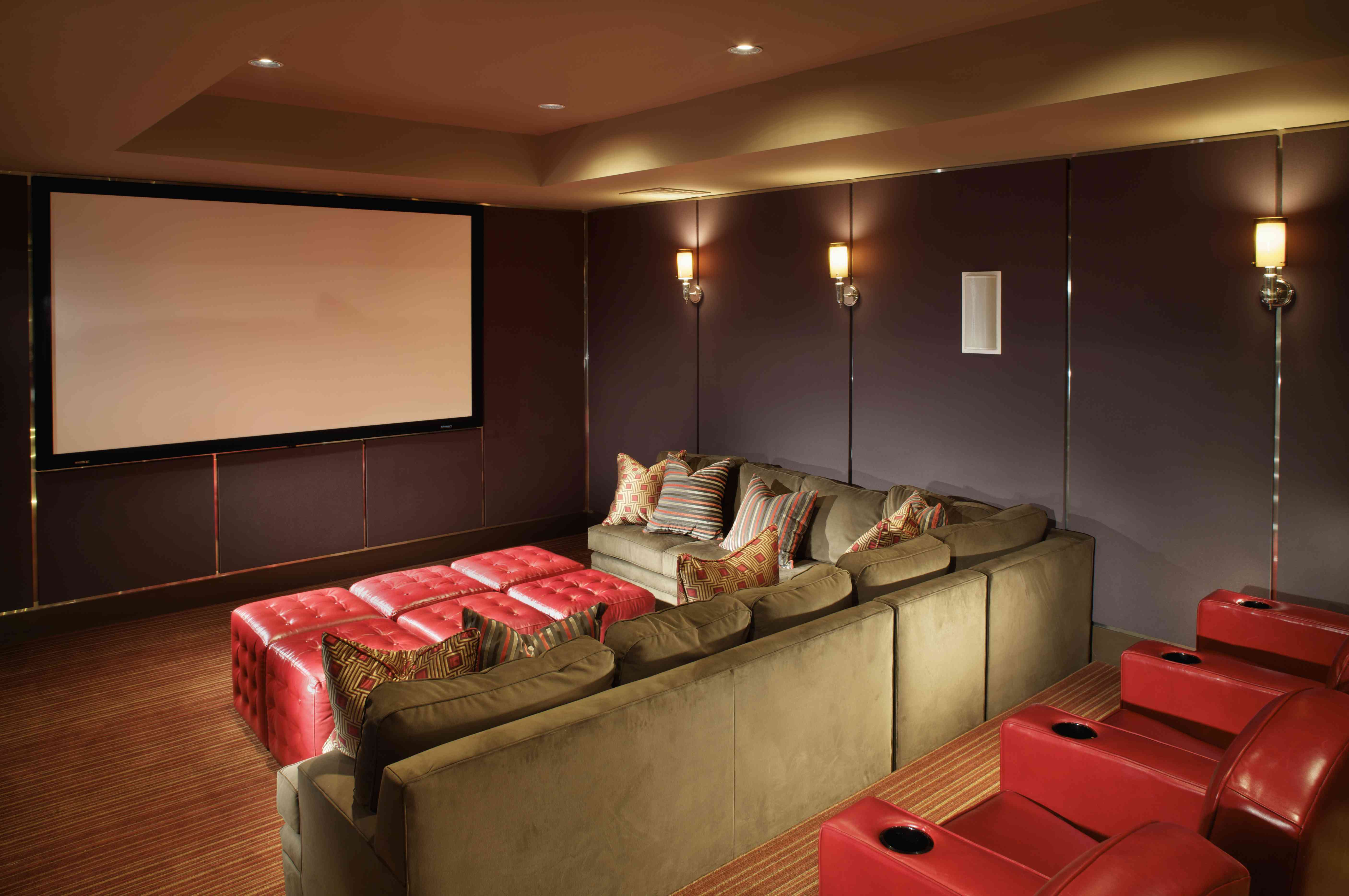
Wall-mounted speakers save floor space and look sleek. Position them at ear level for the best soundstage.
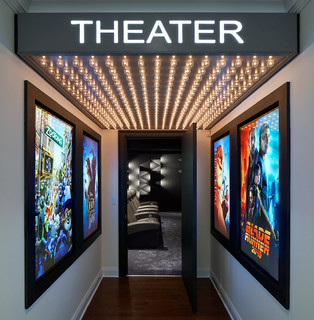
A smart hub controls lights, audio, and curtains with one voice command. Program a ‘movie mode’ for instant immersion.
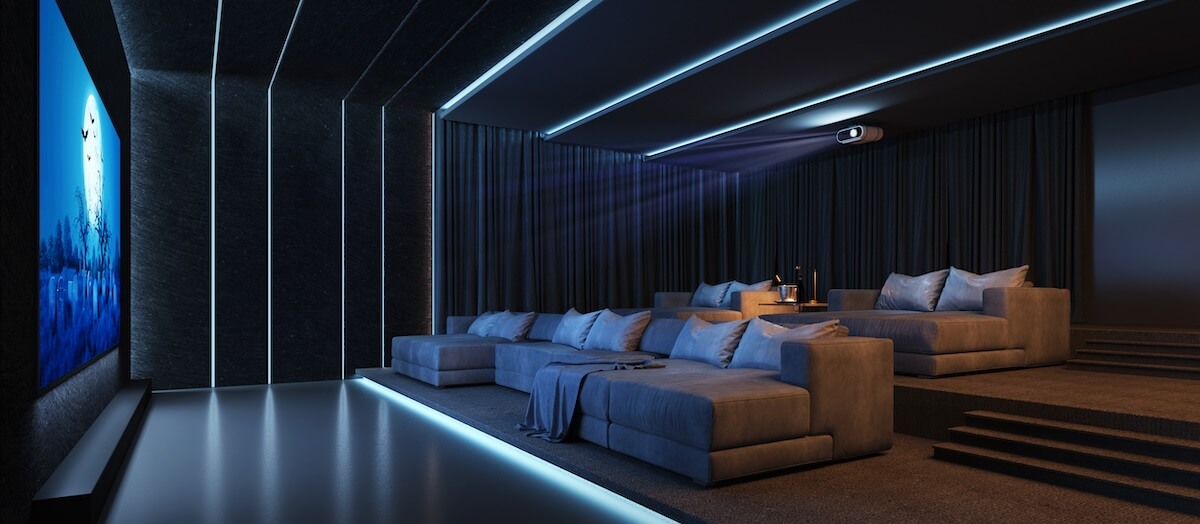
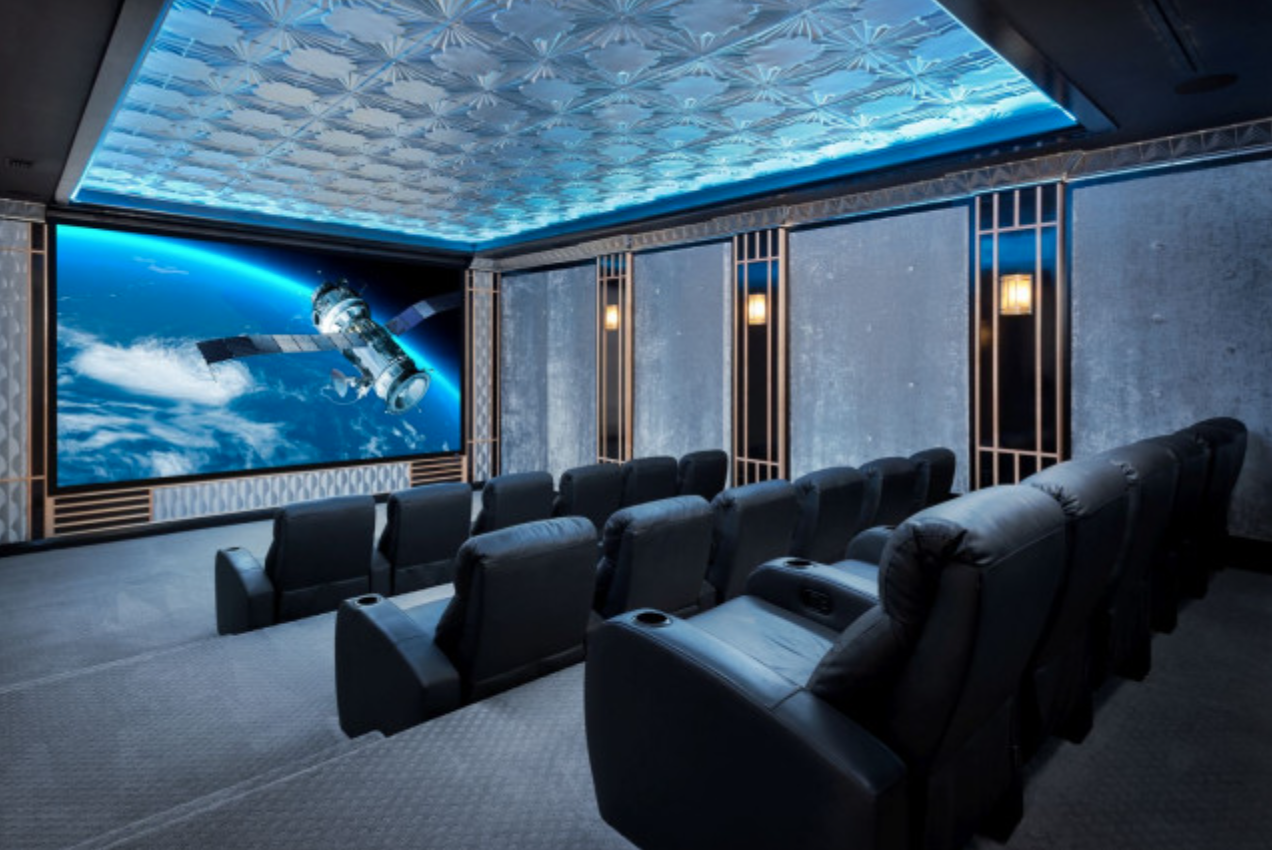
Leather recliners with cup holders offer comfort and durability. Choose power recliners for easy adjustment in the dark.
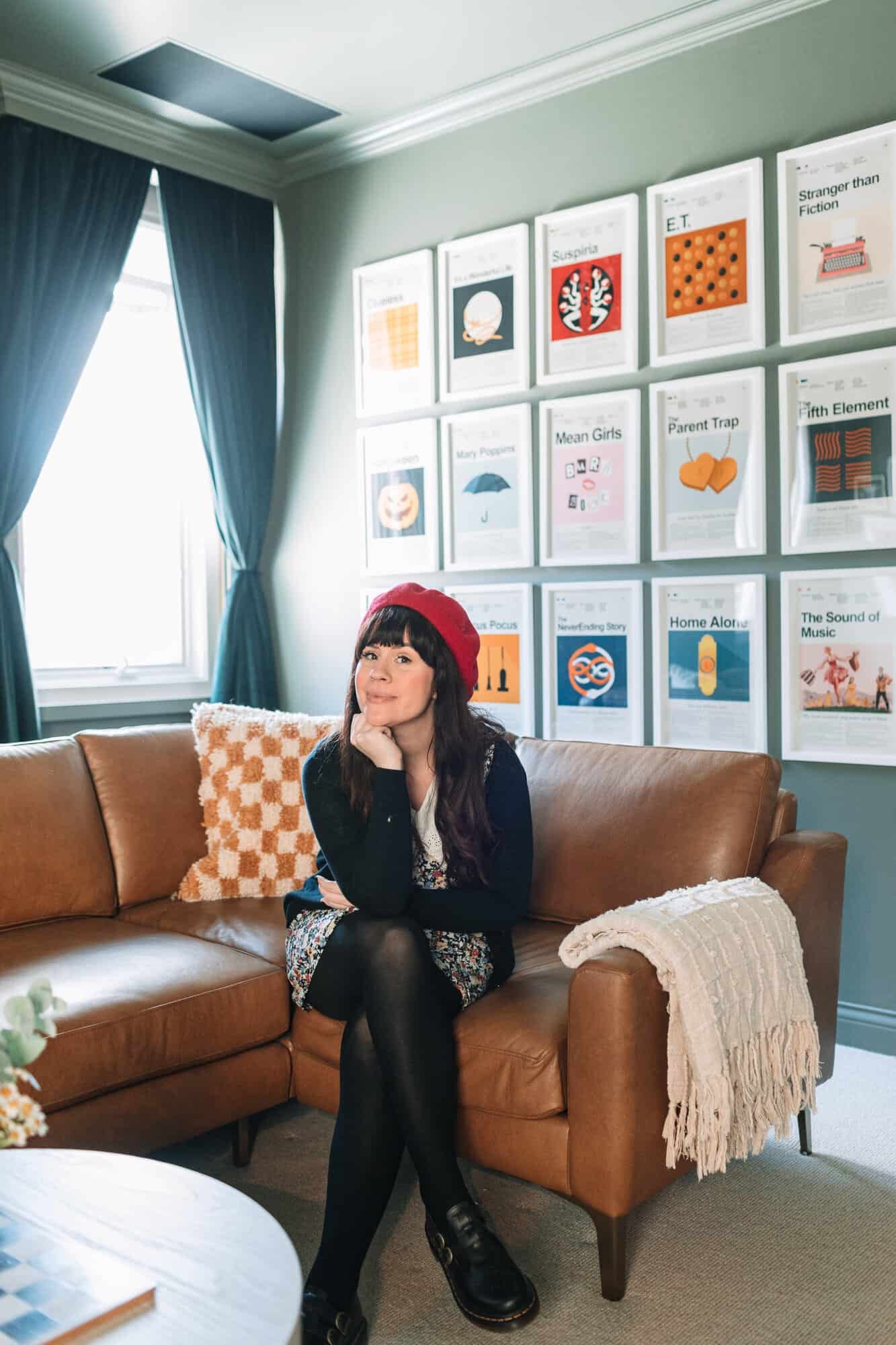
Poster frames with UV-protective glass preserve movie memorabilia. Arrange them in a gallery wall for a vintage theater feel.
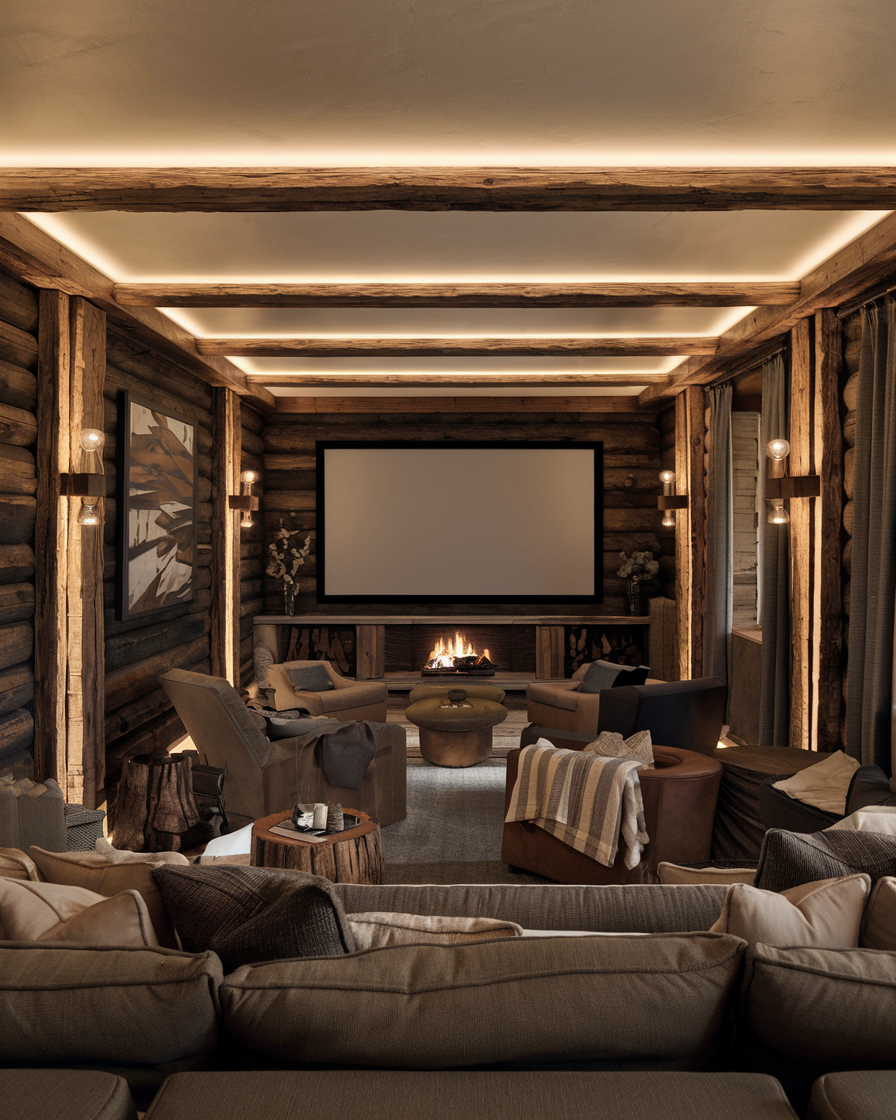
Cove lighting along the ceiling adds a soft halo effect. Use RGB strips to match the mood of any film.
A soundbar with a subwoofer is a simple upgrade for clear dialogue. Place it directly below the screen for proper alignment.
Black acoustic foam tiles on the ceiling reduce echo from above. Install them in a checkerboard pattern for style.
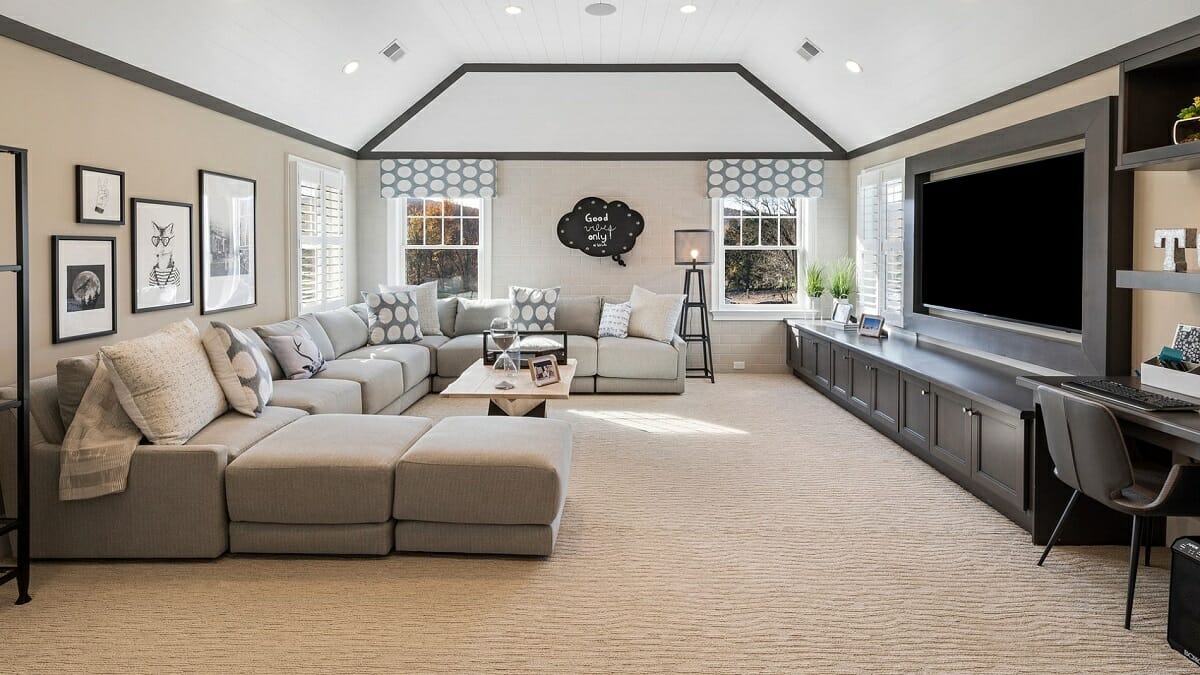
Matte charcoal walls eliminate glare and frame the screen beautifully. Pair with deep burgundy velvet curtains for a classic look.
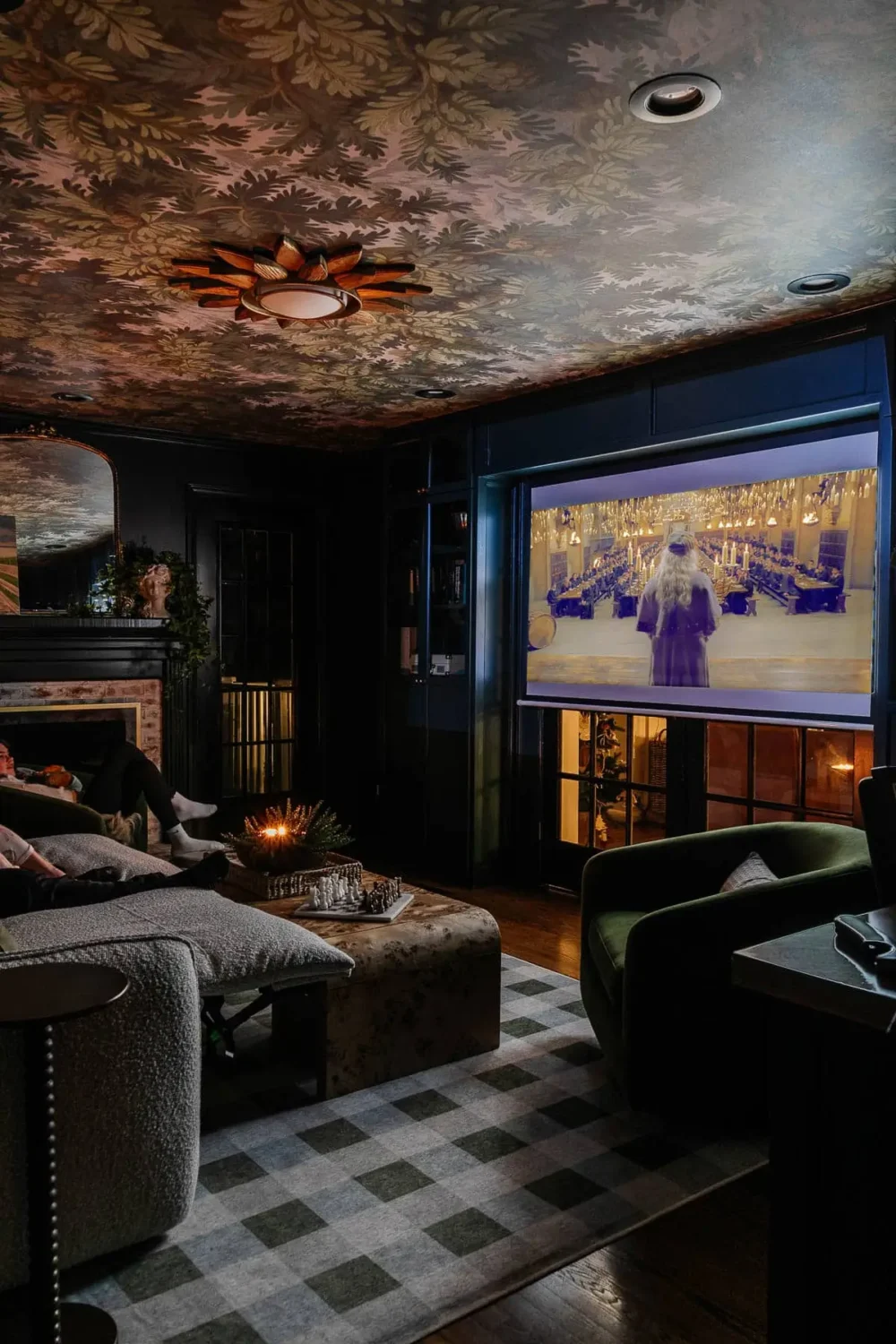
Geometric acoustic panels add texture and improve sound. Choose hexagons in charcoal and navy for a modern vibe.
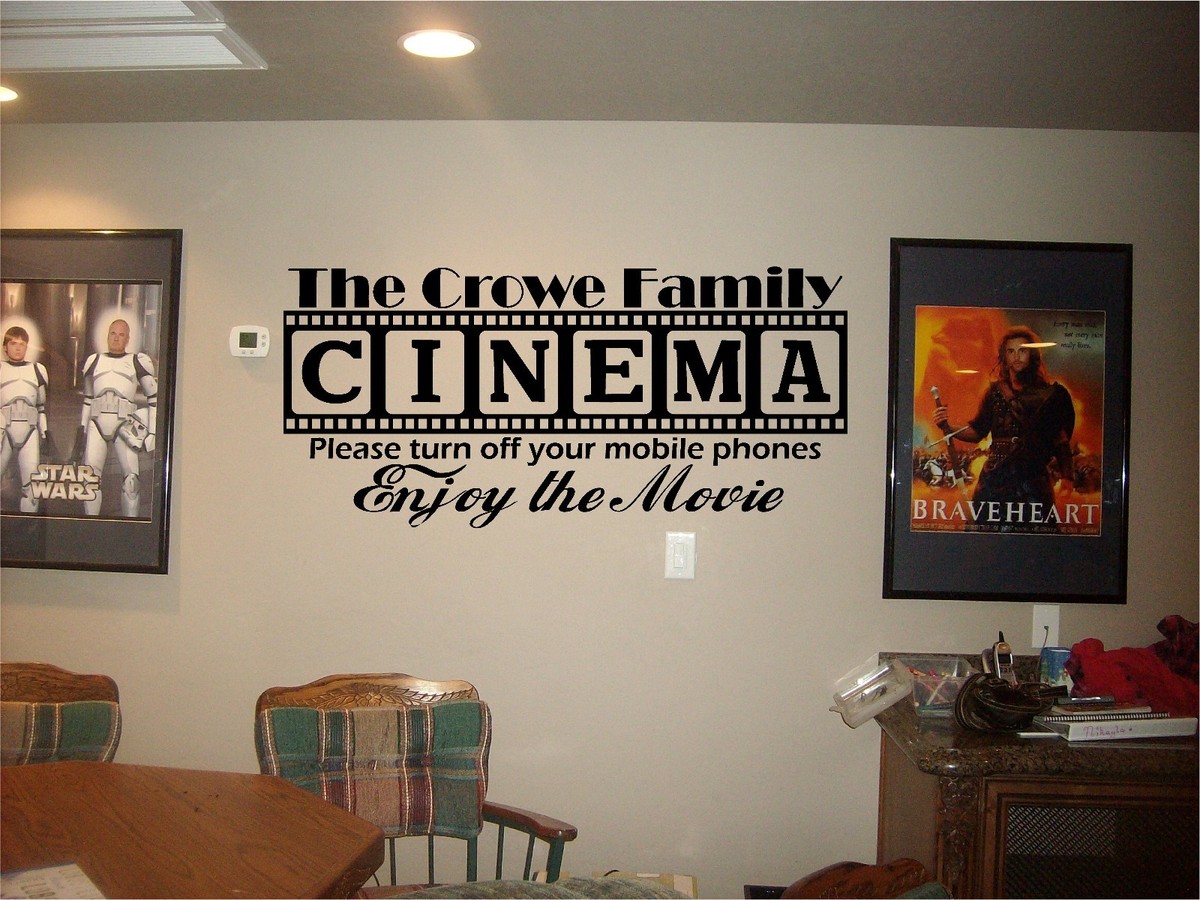
Dimmable sconces with warm bulbs create a soft glow. Install them at 60 inches high for even light distribution.
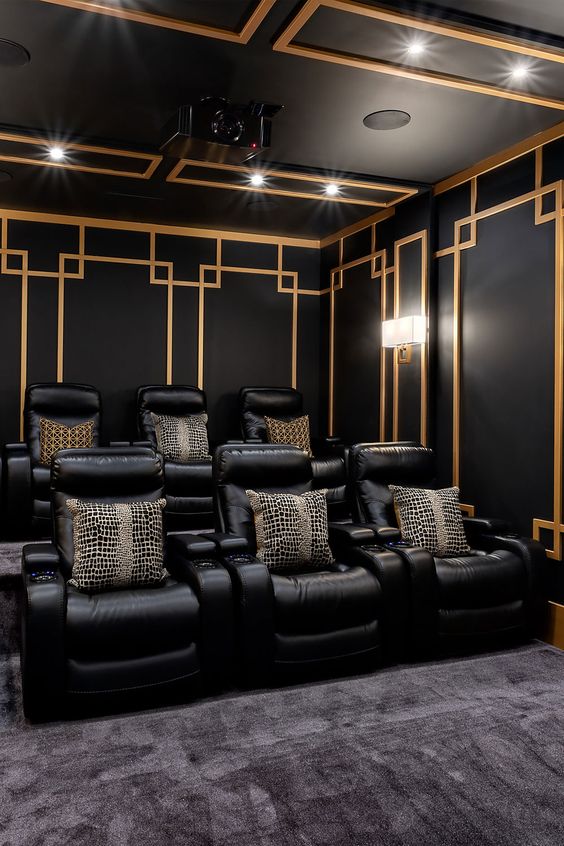
LED strip lighting behind the screen reduces eye strain. Use bias lighting with a color temperature of 6500K for accuracy.
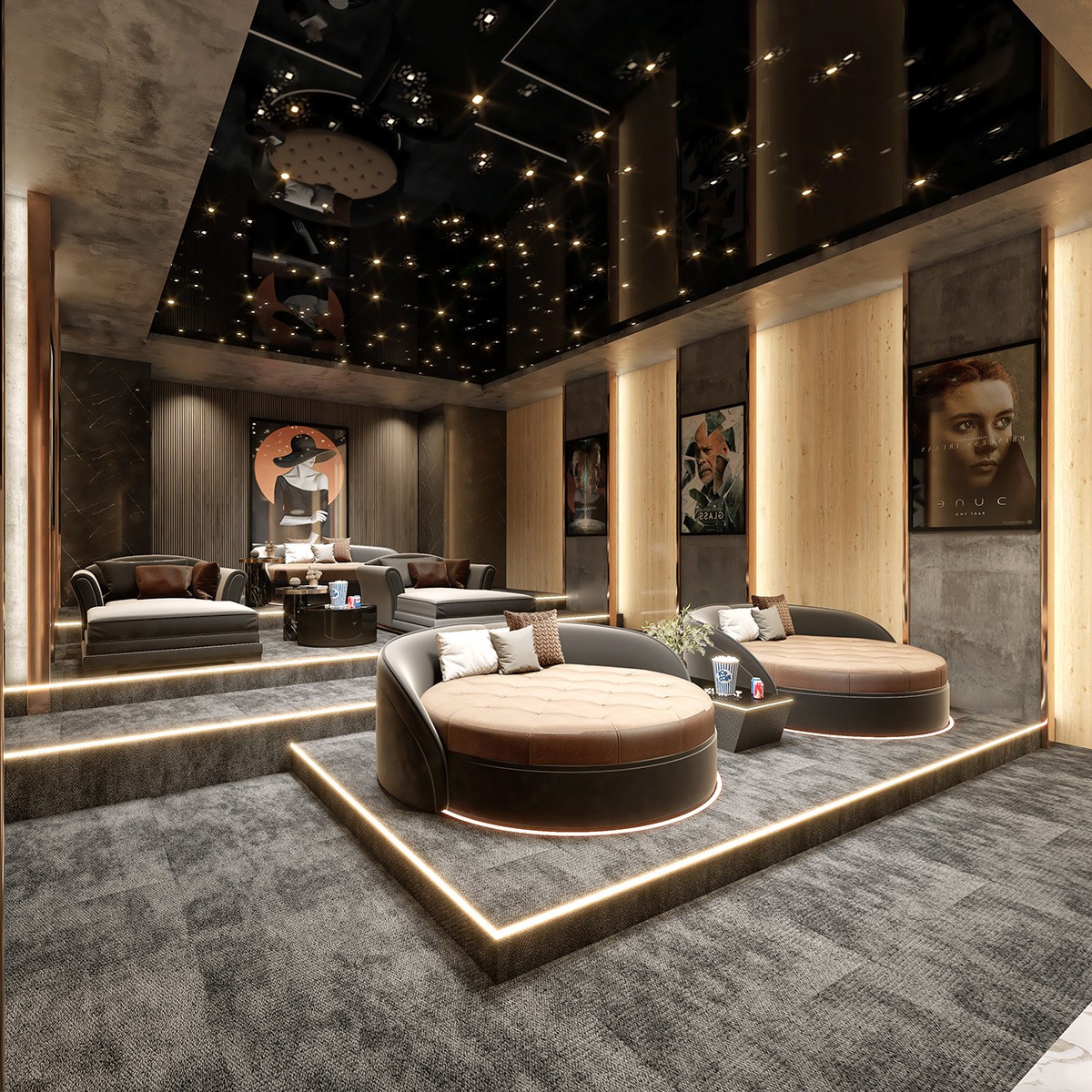
A tiered platform for seating ensures everyone sees the screen. Build it with plywood and carpet for a professional finish.
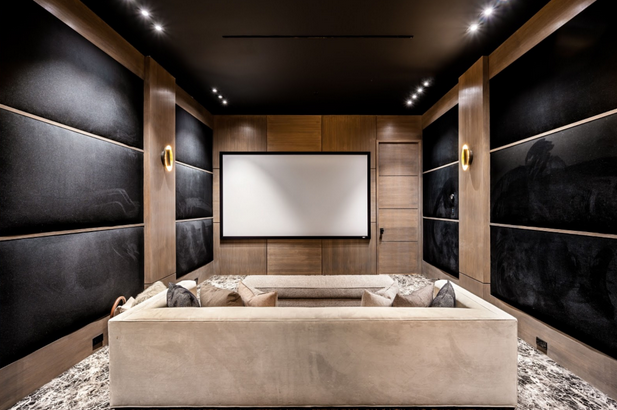
A mini fridge and popcorn machine turn your space into a concession stand. Keep them on a cart with wheels for easy moving.
Bringing Your Home Theater Vision to Life
Step-by-Step Guide to Execution
- Start by painting the walls and ceiling with a matte, dark color like charcoal or deep navy. This reduces glare and makes the screen pop.
- Install acoustic panels on side walls and behind the seating area. Choose geometric patterns for a modern look while improving sound clarity.
- Add dimmable sconces at eye level and LED strip lighting behind the screen or along baseboards. Use smart bulbs for easy control via voice or app.
- Arrange seating on a slight riser if you have multiple rows. For a single row, a deep sectional with recliners works best.
- Set up a snack station with a mini fridge, popcorn machine, and a beverage dispenser. Keep it within arm’s reach of the main seats.
What to Avoid in Execution
- Don’t use glossy paint or light-colored walls. They reflect light and wash out the picture.
- Avoid placing speakers too close to corners. This creates muddy bass and echoes.
- Don’t install bright overhead lights on a dimmer that doesn’t go low enough. Use separate circuits for ambient and task lighting.
- Skip thin carpet or bare floors. They don’t absorb sound well and cause echoes.
Maintenance Tips for Long-Lasting Enjoyment
- Dust acoustic panels monthly with a soft brush attachment to keep them effective.
- Clean screen with a microfiber cloth and approved cleaner. Never use paper towels.
- Check LED strips for flickering every six months. Replace any faulty sections promptly.
- Vacuum carpet and upholstery weekly to prevent dust buildup that affects air quality.
Frequently Asked Questions
Can I use regular paint for the walls?
Yes, but choose a matte finish in a dark color. Glossy or semi-gloss paints reflect light and reduce contrast.
How many acoustic panels do I need?
Cover about 20-30% of the wall surface area. Focus on the side walls and the wall behind the seating.
What’s the best seating for a small room?
Use a loveseat or two recliners instead of a large sectional. This leaves room for side tables and a snack station.
Your home theater should feel like a personal cinema, not a living room with a big TV. By focusing on dark colors, proper lighting, and sound treatment, you create an immersive escape.
Start with one wall and add elements over time. Even small changes like new sconces or a rug can transform the space.
Imagine settling into your seat as the lights dim and the screen glows. That experience is within reach with the right choices today.
