

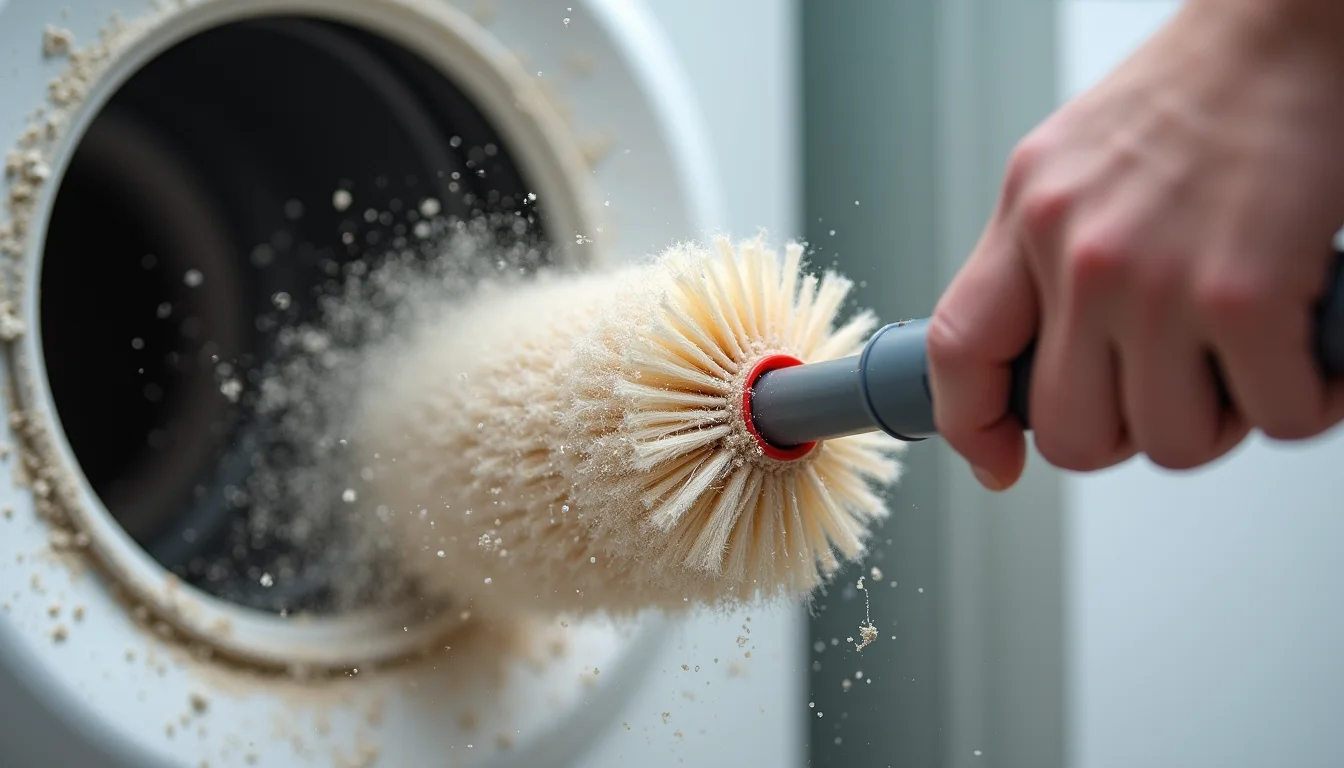
You might think your dryer is working fine, but lint buildup inside the vent is silently wasting your money and putting your home at risk. A clogged vent forces your dryer to run longer, hikes up your energy bill, and is a leading cause of house fires. The right dryer vent cleaning tools can fix this fast and keep your family safe.
Forget expensive service calls. With a simple rotary brush kit and a power drill, you can clear deep lint in under 30 minutes. These tools are affordable, easy to use, and make a huge difference in your dryer’s performance. Stop ignoring that slow drying time and take action today.
Rotary Brush Kits and Flexible Rods for Deep Vent Cleaning
The most effective tool for cleaning long dryer vent runs is a rotary brush kit. These kits come with stiff nylon bristles attached to flexible rods that connect to your power drill. When you spin the brush, it scrubs lint off the duct walls and pulls it toward the exit.
Most kits include multiple extension rods that can reach up to 30 feet, perfect for straight vent runs and even tight elbow turns. Professional-grade systems, like those from Vac Systems International, use secure button-locking rods. This prevents the rods from unscrewing and breaking apart inside your vent, which is a common problem with cheaper threaded rods.
Always run your drill in the forward direction when using threaded rods. Going backward can cause the rods to detach and get stuck. A good rotary brush kit costs between $30 and $60 and can cut your drying time in half. It is a small investment for big savings and peace of mind.
‘
| Tempo Estimado: | 1-2 horas |
| Custo Médio: | $50 – $150 |
| Nível de Dificuldade: | Fácil a Médio |
Materiais Necessários
- Kit de escova rotativa para dutos de secadora
- Hastes de extensão flexíveis
- Adaptadores de mangueira de vácuo
- Escova para o filtro de fiapos
- Furadeira (se o kit for rotativo)
- Chave de fenda (para remover a grade externa, se necessário)
- Luvas de proteção
- Máscara contra poeira
O Passo a Passo Definitivo
- Passo 1: Desconecte a energia – Desligue a secadora da tomada ou disjuntor. Segurança em primeiro lugar.
- Passo 2: Remova a grade externa – Desconecte a mangueira da secadora. Use uma chave de fenda se necessário.
- Passo 3: Monte o kit de escova – Conecte as hastes de extensão flexíveis à escova rotativa.
- Passo 4: Insira a escova no duto – Comece a inserir a escova no duto da secadora.
- Passo 5: Use a furadeira (se aplicável) – Conecte a furadeira e gire no sentido horário. Avance lentamente.
- Passo 6: Limpe o filtro de fiapos – Use a escova específica para limpar o filtro e seu compartimento.
- Passo 7: Aspire os resíduos – Use adaptadores de mangueira de vácuo para remover fiapos soltos.
- Passo 8: Remova a escova – Retire cuidadosamente a escova e as hastes do duto.
- Passo 9: Reconecte a mangueira – Conecte a mangueira da secadora de volta ao aparelho.
- Passo 10: Restaure a energia – Ligue a secadora e verifique se está funcionando corretamente.
Erros Comuns na Execução
- Não desconectar a energia da secadora antes de iniciar a limpeza. Isso pode causar choques elétricos graves.
- Forçar a escova rotativa no duto, especialmente em curvas fechadas. Isso pode danificar o duto ou prender as hastes.
- Não limpar o filtro de fiapos e seu compartimento. Essa área acumula muitos fiapos e reduz a eficiência.
Aprofundamento Técnico
Rotary Brush Kits for Dryer Vents
Esses kits de escova rotativa são ferramentas essenciais para a limpeza de dutos de secadora em 2026. Eles usam uma escova acoplada a hastes flexíveis que giram com uma furadeira. A rotação remove fiapos incrustados nas paredes do duto, melhorando o fluxo de ar.
Flexible Extension Rods for Duct Cleaning
As hastes de extensão flexíveis são cruciais para alcançar toda a extensão do duto. Elas permitem que a escova navegue por curvas e cantos. Escolha hastes de boa qualidade para evitar que se desconectem dentro do duto.
Vacuum Hose Attachments for Dryer Lint
Adaptadores de mangueira de vácuo são ótimos para sugar fiapos soltos. Eles alcançam áreas difíceis, como o compartimento do filtro de fiapos. Isso ajuda a remover detritos que a escova não alcança.
Read also: Steam Cleaners in 2026: The Chemical-Free Way to Sanitize Your Home
Lint Trap Brushes for Regular Maintenance
Escovas para o filtro de fiapos são simples, mas eficazes para limpeza regular. Elas garantem que o filtro esteja sempre livre de acúmulos. Manter o filtro limpo é vital para a eficiência da secadora e prevenção de incêndios.
Dryer Fire Prevention with Proper Cleaning
A limpeza regular dos dutos é a principal forma de prevenção de incêndios em secadoras. O acúmulo de fiapos é altamente inflamável. Manter os dutos limpos reduz drasticamente o risco de incêndios domésticos.
DIY Dryer Vent Cleaning Step by Step
A limpeza DIY é totalmente factível com as ferramentas certas. Siga os passos cuidadosamente, começando pela desconexão da energia. Use um kit de escova rotativa e um aspirador para melhores resultados.
Tools for Long Dryer Vent Runs
Para dutos de secadora longos, kits com hastes extensíveis de até 30 pés são ideais. Verifique se as hastes se conectam de forma segura. Hastes robustas evitam quebras e garantem uma limpeza completa.
Cleaning Elbow Turns in Dryer Vents
As curvas em cotovelo (elbow turns) são pontos críticos para acúmulo de fiapos. As hastes flexíveis e a ação rotativa da escova ajudam a limpar essas áreas. Uma limpeza eficaz nessas curvas melhora o fluxo de ar significativamente.
How to Get the Most Out of Your Dryer Vent Cleaning Tools
Safety First: Drill Direction Matters
Always run your drill in the forward (clockwise) direction when using threaded rods. Reversing the drill can unscrew the rods inside your vent, leaving them stuck and causing a bigger problem.
Step-by-Step: Cleaning Like a Pro
- Disconnect the dryer from the power and gas.
- Pull the dryer away from the wall and detach the vent hose.
- Attach the rotary brush to your drill and insert it into the vent opening.
- Run the drill on low speed while slowly pushing the brush through the duct.
- Pull the brush back out and vacuum up any loose lint.
- Repeat until no more lint comes out.
Common Mistakes to Avoid
Don’t use a standard household vacuum for deep vent cleaning. It lacks the power to remove compacted lint and can overheat.
Never skip cleaning the lint trap housing. That area also collects buildup and reduces airflow.
Frequently Asked Questions
How often should I clean my dryer vent?
You should clean your dryer vent at least once a year. If you notice longer drying times or a burning smell, clean it more often.
Can I use a leaf blower to clean my dryer vent?
Leaf blowers are not recommended. They can push lint deeper into the vent and damage the ductwork.
What length of rod kit do I need?
Measure the total length of your vent run from the dryer to the outside exit. Buy a kit that covers that distance, plus a few extra feet for bends.
Choosing the right dryer vent cleaning tools protects your home from fire hazards and saves money on energy bills. A quality rotary brush kit pays for itself in just one use.
Take action today and clean your vent before your next laundry load. Your dryer will run more efficiently and last longer.
Imagine a future where your dryer works fast and your home stays safe. That future starts with a clean vent.
