

You turn on your AC, and nothing happens. Or maybe it runs but blows warm air. Before you call a technician and spend $150 just for them to look at it, know this: many common AC problems have simple fixes you can do yourself. With a few basic tools and a bit of know-how, you can often get your cooling back without the expensive service call.
But safety comes first. Air conditioning units store powerful electrical charges even when turned off. One wrong move can cause serious injury or death. This guide will walk you through the safe, beginner-friendly steps to diagnose and fix common AC issues. You’ll learn what you can tackle yourself and when you absolutely must call a pro.
Start With the Obvious: Thermostat and Power Checks
Before you open any panels or touch any wires, check the simple things. Make sure your thermostat is set to ‘Cool’ and the temperature is set lower than the current room temperature. If it’s a battery-powered thermostat, replace the batteries – dead batteries are a common culprit. Also, check your home’s circuit breaker box. Look for a tripped breaker labeled ‘AC’ or ‘Furnace’ and reset it if needed.
Next, inspect the outdoor condenser unit. Is it running at all? Listen for a humming sound. If the fan isn’t spinning but you hear a hum, the capacitor may be bad. If there’s no sound at all, the contactor or a blown fuse could be the issue. But don’t touch anything yet – you must turn off power to the unit first. Go to your main electrical panel and flip the AC breaker off. Then, locate the disconnect box near the outdoor unit and pull the handle out to kill power completely.
AC Repair for Beginners: Save Money and Stay Cool
Many common air conditioning problems can be fixed by you. This guide shows you how to tackle simple AC repairs. You can save money and avoid costly service calls.
We focus on safety and practical steps. Learn to identify issues and perform basic maintenance. This will keep your AC running smoothly all summer.
| Estimated Time | Cost ($ USD) | Difficulty Level |
|---|---|---|
| 30-60 minutes | $20 – $100 (for parts) | Beginner |
Necessary Materials
- Safety Glasses
- Work Gloves
- Screwdriver Set (insulated recommended)
- Vacuum Cleaner (shop vac preferred)
- Replacement Air Filter
- Coil Cleaner Spray (optional)
- Wet/Dry Vacuum (for drain line)
- Multimeter (optional, for advanced diagnostics)
The Definitive Step-by-Step
- Step 1: Safety First – Turn off power at the thermostat and circuit breaker. Always prioritize safety.
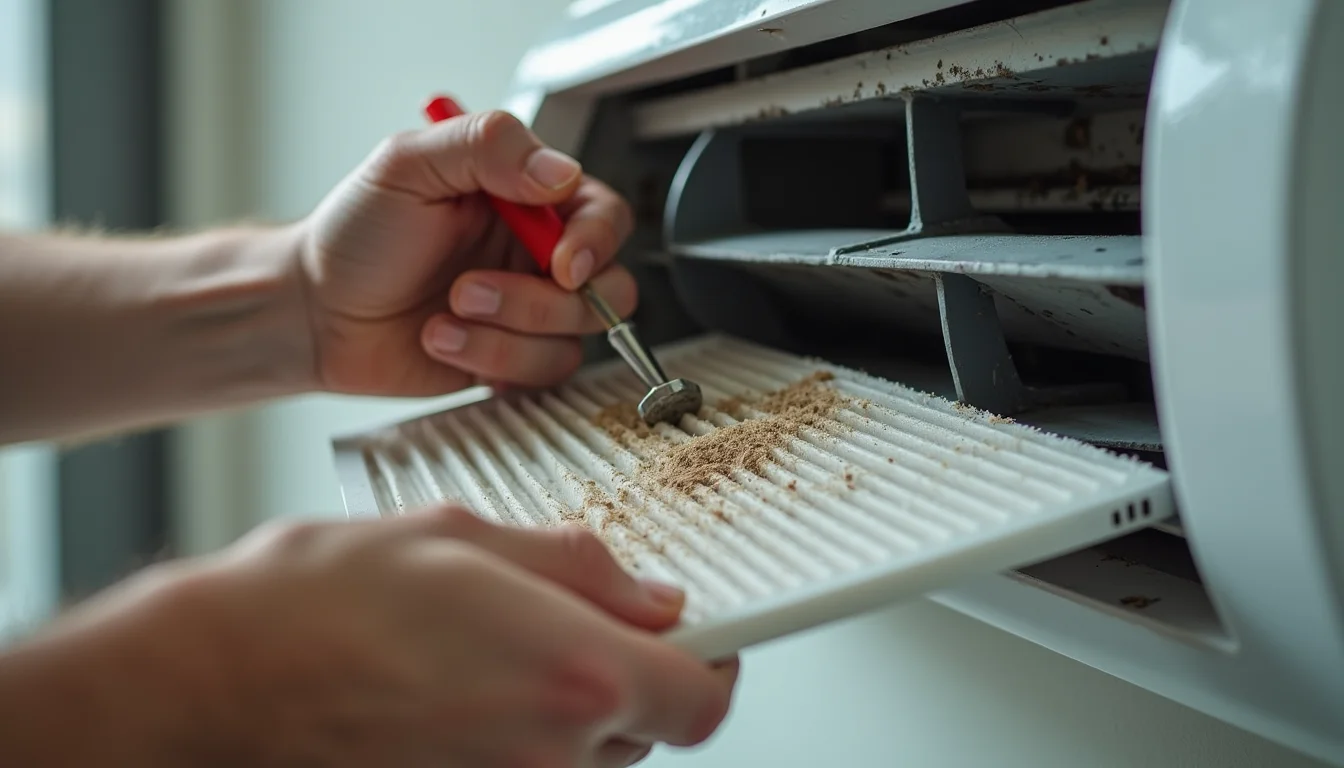
- Step 2: Check the Air Filter – Locate and inspect your air filter. Replace it if it’s dirty. A clogged filter is a common AC issue.
- Step 3: Inspect the Outdoor Unit – Clear debris around the condenser. Ensure good airflow for efficient cooling.
- Step 4: Clean Condenser Coils – Gently vacuum or hose down the coils. Avoid bending the delicate fins.
- Step 5: Check the Thermostat – Verify settings are on ‘Cool’ and below room temperature. Replace batteries if needed.
- Step 6: Clear the Drain Line – Use a wet/dry vac or bleach solution. Prevent water buildup and potential damage.
- Step 7: Listen for Humming – If the fan hums but doesn’t spin, a capacitor might be the cause. This is a common repair.
- Step 8: Check for Tripped Breakers – Look for tripped switches on your main electrical panel. Reset if necessary.
Common Execution Mistakes
- Forgetting to turn off power before working on the unit. This is extremely dangerous.
- Bending or damaging condenser coil fins with high-pressure water. This reduces efficiency.
- Ignoring warning signs like strange noises or smells. These often indicate bigger problems.
Ferramentas Básicas para Reparo de CA
Essential tools include safety glasses and gloves for protection. An insulated screwdriver set is crucial for electrical components. A shop vac helps with cleaning debris and clearing drain lines.
Como Identificar Problemas Comuns no Ar Condicionado
Look for signs like blowing warm air, unusual noises, or the unit not turning on. A dirty air filter is a frequent culprit for many AC problems. Understanding these symptoms helps with troubleshooting.
Passo a Passo para Limpar Filtros de CA
First, turn off the AC. Then, locate the filter, usually in the return air duct or the air handler. Slide out the old filter and insert a new one. This simple step improves air quality and AC performance.
Substituindo Capacitores com Segurança
Always disconnect power first. Capacitors can hold a dangerous charge. Use an insulated screwdriver to discharge it before removal. Replacing a blown capacitor can fix a fan that hums but won’t spin.
Quando Chamar um Técnico de CA
If you suspect a refrigerant leak or see damaged wiring, call a professional. Complex issues or recurring problems like frozen coils require expert knowledge. EPA certification is needed for refrigerant handling.
Dicas de Manutenção Preventiva para Iniciantes
Regularly change your air filter, typically every 1-3 months. Keep the outdoor unit clear of debris. Schedule annual check-ups with a qualified technician. This prevents costly repairs.
Economia de Custos em Reparos de CA
Performing basic maintenance yourself can save significant money. Simple fixes like filter replacement or cleaning coils are inexpensive. Avoiding unnecessary service calls adds up to substantial savings.
For more detailed information, check out DIY AC Repair Tips. Learn more about common AC issues at AC Repair Explained. Find additional guidance on Expert AC Repair Tips.
Expert Tips for DIY AC Repair
What to Avoid
Never attempt refrigerant repairs without EPA certification. Refrigerant is hazardous and requires specialized handling.
Do not use high-pressure water on condenser coils. High pressure can bend the delicate aluminum fins and restrict airflow.
Step-by-Step Capacitor Replacement
Turn off power at the breaker and the outdoor disconnect. Use an insulated screwdriver to short the capacitor terminals to discharge it safely.
Take a photo of the wiring before removing the old capacitor. Replace with an identical rating (microfarads and voltage).
Tools Every Beginner Needs
- Multimeter for testing capacitors and contactors
- Insulated screwdriver set for discharging capacitors
- Gloves and safety goggles for protection
- Fin comb for straightening bent condenser coils
Frequently Asked Questions
Can I fix a refrigerant leak myself? No, handling refrigerant requires EPA certification and specialized equipment. Call a licensed professional.
How do I know if my capacitor is bad? If the outdoor fan hums but does not spin, or if the unit tries to start but clicks off, the capacitor may be faulty. A multimeter can confirm.
Why is my AC blowing warm air? First, check the thermostat setting and air filter. If those are fine, then inspect the outdoor unit for debris or a tripped breaker.
Starting with basic troubleshooting can save you money and give you confidence. Most common AC issues are simple to fix with the right safety steps.
Next, create a maintenance schedule to change filters monthly and clean the condenser annually. This prevents many problems before they start.
Imagine a summer where your AC runs smoothly and efficiently. With these skills, you can keep your home comfortable without unnecessary service calls.
