

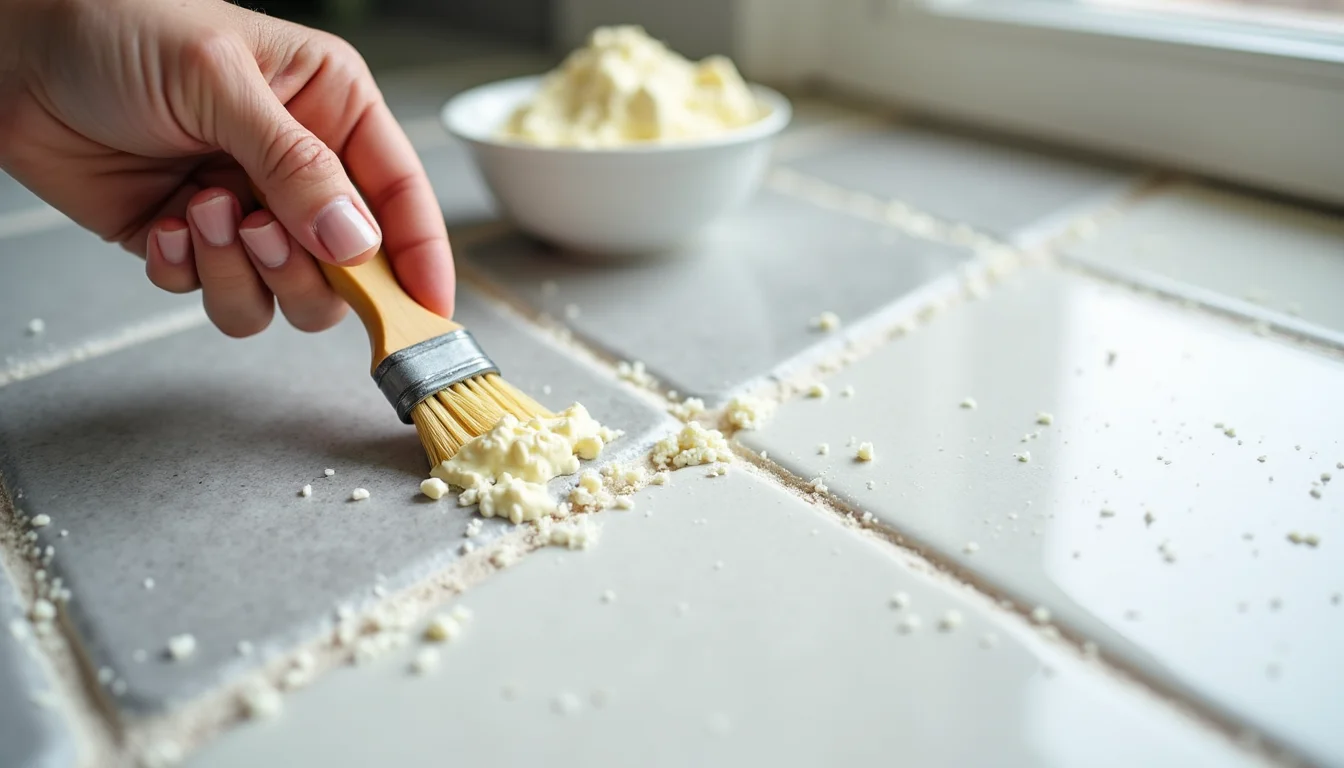
If you have spent hours scrubbing grout lines with store-bought cleaners and still see gray stains, you are not alone. Most commercial grout cleaners cost a lot but fail to remove embedded dirt. The truth is that you can make a powerful DIY grout cleaner with three common household items for pennies.
Forget harsh chemicals that leave strong fumes and risk damaging your tile. A simple paste of baking soda, hydrogen peroxide, and dish soap whitens and disinfects grout without toxic residue. This method works on ceramic, porcelain, and most stone tiles when used correctly.
Why the Magic Paste beats store-bought grout cleaners
The most effective DIY grout cleaner in 2026 is the Magic Paste: baking soda, 3% hydrogen peroxide, and a squirt of Blue Dawn dish soap. Baking soda acts as a gentle abrasive to scrub away grime, while hydrogen peroxide whitens and kills mildew. The dish soap cuts through grease and helps the paste cling to vertical surfaces.
Apply the paste with an old toothbrush, let it sit for five to ten minutes, then scrub and rinse. Users report that this mixture outperforms many bleach-based products and costs less than two dollars per batch. Just be careful: never mix bleach with vinegar or hydrogen peroxide, as that creates toxic chlorine gas.
Tired of dingy grout lines ruining your home’s look?
This guide shows you how to make your own powerful grout cleaner using simple household items. Get ready for sparkling clean grout without harsh chemicals.
We focus on a proven, budget-friendly method that really works. It’s safe for most homes and easy enough for anyone to do. Let’s restore your tile’s beauty.
| Estimated Time: | 30-60 minutes |
| Cost: | $5 – $10 |
| Difficulty Level: | Easy |
Necessary Materials
- Baking soda
- Hydrogen peroxide (3% solution)
- Mild dish soap (like Blue Dawn)
- Old toothbrush or stiff grout brush
- Small bowl for mixing
- Warm water
- Clean cloths or sponges
- Grout sealer (optional, but recommended)
The Definitive Step-by-Step
- Step 1: Make the Paste – Mix 1/2 cup baking soda, 1/4 cup hydrogen peroxide, and 1 tablespoon dish soap in a bowl.
- Step 2: Apply the Cleaner – Use a toothbrush to spread the paste onto the grout lines.
- Step 3: Let It Sit – Allow the paste to work for 5-10 minutes to loosen dirt.
- Step 4: Scrub Gently – Use the brush to scrub the grout lines firmly but carefully.
- Step 5: Rinse Thoroughly – Wipe away the paste with a damp cloth or sponge and warm water.
- Step 6: Dry the Area – Pat the grout lines dry with a clean towel.
- Step 7: Seal if Desired – Apply a grout sealer to protect the clean grout.
Common Execution Mistakes
- Using too much liquid, making the paste runny and less effective.
- Not letting the paste dwell long enough to break down grime.
- Scrubbing too hard, which can damage grout or tile edges.
Technical Depth
Mixing Baking Soda and Vinegar
Mixing baking soda and vinegar creates a fizzing reaction that can help lift dirt. However, vinegar is acidic and can damage natural stone or unsealed grout. Always test in a small area first.
Read also: 8 Surprising Borax Uses That Solve Your Toughest Cleaning Problems
Applying Hydrogen Peroxide Paste
This paste combines a mild abrasive with a whitening agent. The hydrogen peroxide helps to lift stains and kill mold. Apply it directly to the grout lines for best results.
Using a Steam Cleaner on Grout
Steam cleaners use hot vapor to loosen dirt and kill bacteria. They are effective for deep cleaning grout without chemicals. Ensure your grout and tile can withstand high heat before using this method.
Scrubbing with a Stiff Brush
A stiff brush is key for dislodging grime from grout pores. Apply firm, consistent pressure. An old toothbrush works well for tight spaces.
Rinsing with Warm Water
Warm water helps to dissolve the cleaning paste and wash away loosened dirt. Ensure all residue is removed. This prevents a sticky film from forming on your tiles.
Read also: Ceramic Tile Flooring: The Wood Look Without the Worry
Sealing Grout After Cleaning
Sealing grout creates a protective barrier against future stains and moisture. It makes cleaning much easier in the long run. Apply a quality grout sealer after the grout is completely dry.
Removing Mold from Grout Lines
For mold, the hydrogen peroxide in the paste is effective. For stubborn mold, a paste of baking soda and water left overnight can help. Ensure good ventilation when cleaning moldy areas.
Cleaning Grout with Bleach Solution
A diluted bleach solution can whiten grout but is harsh. Never mix bleach with vinegar or ammonia, as this creates toxic fumes. Always use in a well-ventilated area and wear gloves. Learn more about grout cleaning. For more DIY ideas, check out this helpful guide. You can also find more cleaning tips here.
Get the Best Results Every Time
What to Avoid
Never mix bleach with vinegar or ammonia. This creates toxic chlorine gas that is dangerous to breathe.
Avoid using acidic cleaners on natural stone like marble or travertine. The acid will etch and dull the surface permanently.
Do not let any cleaner dry on the grout. Rinse thoroughly with water after scrubbing to prevent residue buildup.
Pro Tips for Stubborn Stains
For tough stains, let the baking soda paste sit for 10–15 minutes before scrubbing. This gives the hydrogen peroxide more time to break down the grime.
Use a stiff-bristled brush or an old toothbrush for maximum scrubbing power. A grout brush with a handle makes the job easier on your hands.
If the paste dries out, add a few drops of water to reactivate it. You can also cover the area with plastic wrap to keep it moist.
Sealing Is Key
After cleaning, apply a high-quality grout sealer to protect against future stains. Sealing creates a barrier that makes cleaning much easier next time.
Test the sealer on a small hidden area first to ensure it doesn’t discolor the grout. Reapply sealer every 6–12 months for best protection.
Frequently Asked Questions
Can I use this DIY grout cleaner on colored grout?
Yes, but test it on an inconspicuous area first. Hydrogen peroxide can lighten some colored grouts, so check for any discoloration before applying widely.
Will baking soda and hydrogen peroxide damage my tile?
No, this combination is safe for ceramic, porcelain, and most tile surfaces. Avoid using it on unsealed natural stone like marble, as hydrogen peroxide can cause etching.
How often should I clean my grout with this method?
For maintenance, every 3–4 months is sufficient. For heavily stained grout, you may need to repeat the process once a month until the stains lift.
The baking soda and hydrogen peroxide paste is a proven, affordable solution that works as well as commercial cleaners. You now have the knowledge to restore your grout to a like-new condition.
Try this method this weekend and see the difference for yourself. Once your grout is clean, apply a sealer to keep it looking fresh for months.
Imagine walking into a kitchen or bathroom with bright, clean grout that makes the whole room feel new. This simple DIY step can transform your home’s appearance without spending a dime on harsh chemicals.
