

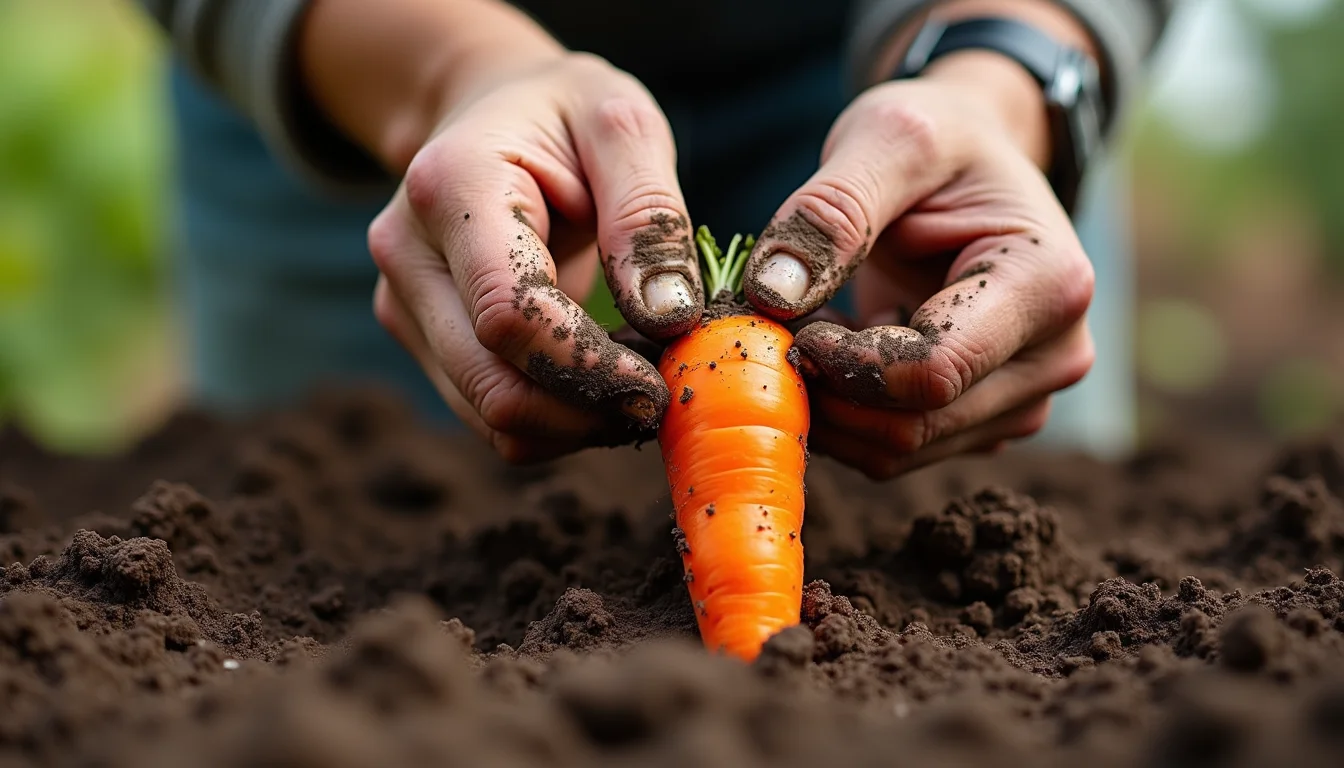
You bought a bag of carrots from the store, and they were woody and tasteless. You think growing your own is hard, but it is not. Carrots are one of the easiest vegetables to grow if you know the simple secrets.
Most people fail because they plant in heavy clay or forget to water the tiny seeds. But with the right soil and a little patience, you can have sweet, crunchy carrots from your own garden. Let me show you how.
When to plant carrots and how to choose the best soil for carrots
Carrots are a cool-season crop, so you plant them in early spring or late summer. For a spring harvest, sow seeds 2 to 3 weeks before the last frost. For a fall crop, plant about 10 weeks before your first fall frost.
The secret to long, straight carrots is loose soil. If your soil is heavy clay or full of rocks, grow in raised beds or containers at least 12 inches deep. Mix in sand or compost to loosen it up. Carrots need soil that is free of stones so the roots can grow down without bending.
Popular varieties like ‘Nantes’ and ‘Danvers’ do well in most gardens. ‘Chantenay’ is great for heavier soil because it grows shorter and thicker. Pick the right type for your soil, and you will have a much better harvest.
Grow Delicious Carrots Right at Home
Growing your own carrots is rewarding and easier than you think. Follow these simple steps for a bountiful harvest.
You can achieve sweet, crisp carrots with the right soil and care. This guide makes it simple for any gardener.
| Estimated Time | Cost ($ USD) | Difficulty Level |
| 55-90 days | $10-$30 | Easy |
Necessary Materials
- Carrot seeds (choose your favorite varieties)
- Loose, well-drained soil (or raised beds/containers)
- Gardening gloves
- Trowel or small shovel
- Watering can or hose
- Organic compost or fertilizer (low nitrogen)
The Definitive Step-by-Step
- Step 1: Prepare the Soil – Ensure soil is loose, rocky, and deep for best root growth. Aim for at least 10-12 inches of depth.
- Step 2: Sow Seeds Directly – Plant seeds 1/4 inch deep. Do not transplant carrots; they dislike it.
- Step 3: Water Consistently – Keep the seedbed moist until germination. Use a fine spray.
- Step 4: Thin Seedlings Early – Once plants are 3-4 inches tall, thin them. Space them 2-4 inches apart.
- Step 5: Keep Soil Moist – Provide about 1 inch of water weekly. Avoid inconsistent watering.
- Step 6: Fertilize Lightly – Use a low-nitrogen fertilizer. This encourages root growth, not just leaves.
- Step 7: Harvest Carefully – Pull carrots when mature. They are usually ready in 55-90 days.
- Step 8: Cure and Store – Remove tops immediately. Store in a cool, humid place.
Common Execution Mistakes
- Planting in rocky or compacted soil, leading to forked carrots.
- Inconsistent watering, causing woody or split roots.
- Failing to thin seedlings, resulting in small, crowded carrots.
Best Soil for Carrots
Carrots need loose, well-drained soil, free from rocks. Aim for a depth of at least 10-12 inches. This allows roots to grow straight and deep. Heavy clay or rocky soils are problematic.
When to Plant Carrots
Carrots are a cool-season crop. Sow seeds 2-3 weeks before the last spring frost. You can also plant in late summer for a fall harvest. Optimal soil temperature is between 55-75°F.
How to Grow Carrots in Containers
Use deep containers, at least 12 inches deep. Fill them with loose, sandy soil. Ensure good drainage holes. This is ideal for small spaces or poor garden soil.
Thinning Carrot Seedlings Correctly
Thin seedlings when they are 3-4 inches tall. Snip unwanted seedlings at the soil line. This prevents disturbing the roots of remaining plants. Proper spacing is crucial for good growth.
Watering Carrots for Sweetness
Consistent moisture is key for sweet carrots. Provide about 1 inch of water per week. Avoid letting the soil dry out completely. Inconsistent watering can make them woody.
Preventing Forked Carrots
Avoid forked carrots by using loose soil. Ensure the soil is free of rocks and debris. Do not disturb roots when thinning. Proper soil preparation is the best prevention.
Harvesting Carrots at Peak Flavor
Carrots are typically ready in 55-90 days. A light frost can actually increase sweetness. Gently pull a carrot to check its size. Harvest before the ground freezes hard.
Carrot Varieties for Every Garden
Popular choices include ‘Nantes’, ‘Danvers’, and ‘Chantenay’. Some varieties are better suited for heavy soils or containers. Choose cultivars based on your soil type and desired carrot size. Explore options like The Old Farmer’s Almanac for specific recommendations. For beginners, consider guides like Journey with Jill. You can also find more tips at Joe Gardener.
Expert Tips for Perfect Carrots
Soil Preparation
- Loosen your soil to at least 12 inches deep. Remove all rocks and clods to prevent forked roots.
- For heavy clay, use a raised bed or deep container. Mix in sand or fine compost to improve drainage.
Seeding and Thinning
- Sow seeds 1/4 inch deep and cover lightly. Keep the soil consistently moist until germination.
- Thin seedlings to 2-4 inches apart when they are 3-4 inches tall. Snip them at the soil line instead of pulling.
Watering and Fertilizing
- Provide about 1 inch of water per week. Inconsistent watering causes woody or split carrots.
- Use a low-nitrogen, high-phosphorus fertilizer. Too much nitrogen makes leafy tops but small roots.
Harvesting and Storage
- Harvest when roots are about 1 inch in diameter. A light frost improves sweetness.
- Remove the green tops immediately after harvest. Store unwashed carrots in a plastic bag in the fridge.
Frequently Asked Questions
Why are my carrots forked?
Forked carrots usually come from soil that is too compact or has rocks. Also, damaging the root during thinning can cause forking.
To avoid this, prepare deep, loose soil and always snip seedlings rather than pulling them.
How long do carrots take to grow?
Most carrot varieties mature in 55 to 90 days. Check the seed packet for the exact days for your variety.
You can start harvesting baby carrots earlier, but wait until the roots are at least finger-sized for full flavor.
Can I grow carrots in containers?
Yes, choose a container at least 12 inches deep with drainage holes. Use a loose, sandy potting mix.
Water more frequently because containers dry out faster. Thin seedlings to 2 inches apart for good root development.
With loose soil, consistent moisture, and proper thinning, you can grow straight, sweet carrots at home. These steps work whether you plant in the ground, raised beds, or containers.
Now pick a variety suited to your soil and season. Start sowing after the last frost or in late summer for a fall harvest.
Imagine pulling up a perfect orange root that tastes like candy. That satisfaction is just a few weeks away with these simple techniques.
