

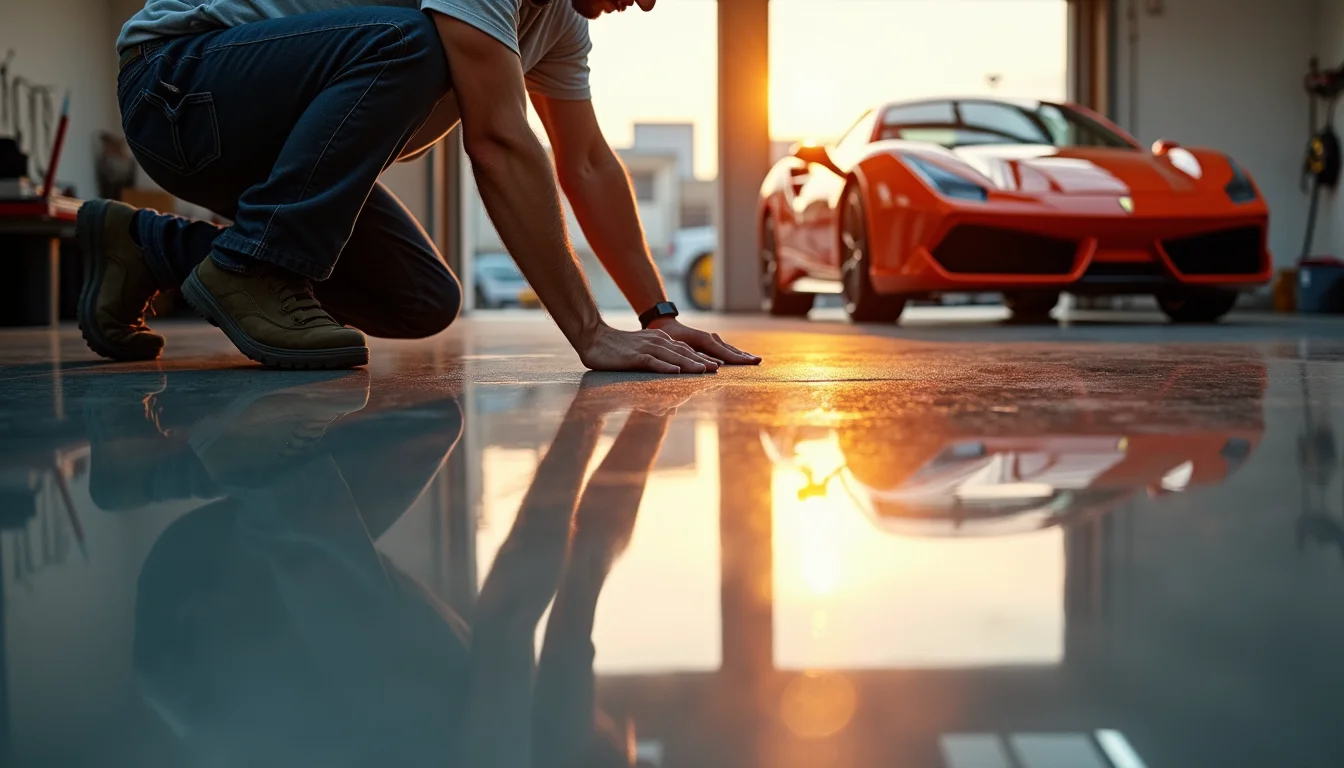
Is your garage floor covered in stains and cracks? You are not alone. Many homeowners think a concrete floor is just fine. But concrete soaks up oil, sweat, and dirt, making it a headache to clean.
Epoxy floor coating turns that ugly concrete into a smooth, glossy surface. It looks like a showroom floor. And the best part? It is tough enough for daily use and easy to wipe down.
Why Choose Epoxy Floor Coating Systems for Your Home
Epoxy is a two-part resin that bonds to concrete like glue. When mixed, it creates a hard, plastic-like layer. This layer resists chemicals, impacts, and moisture. That is why epoxy floors are common in garages and workshops.
You have options like solid color, metallic, or flake epoxy floors. Metallic floors give a shiny, marble look. Flake floors add texture and hide dirt better. Solid colors offer a clean, modern finish. Choose based on your style and how much traffic the floor gets.
Professional installation costs around $3 to $7 per square foot. DIY kits are cheaper, but prep work is key. You must clean and etch the concrete first. Skip this step, and the epoxy will peel. For high-traffic areas, hire a pro for best results.
Epoxy Floors in 2026: The Future of Durable and Stylish Surfaces
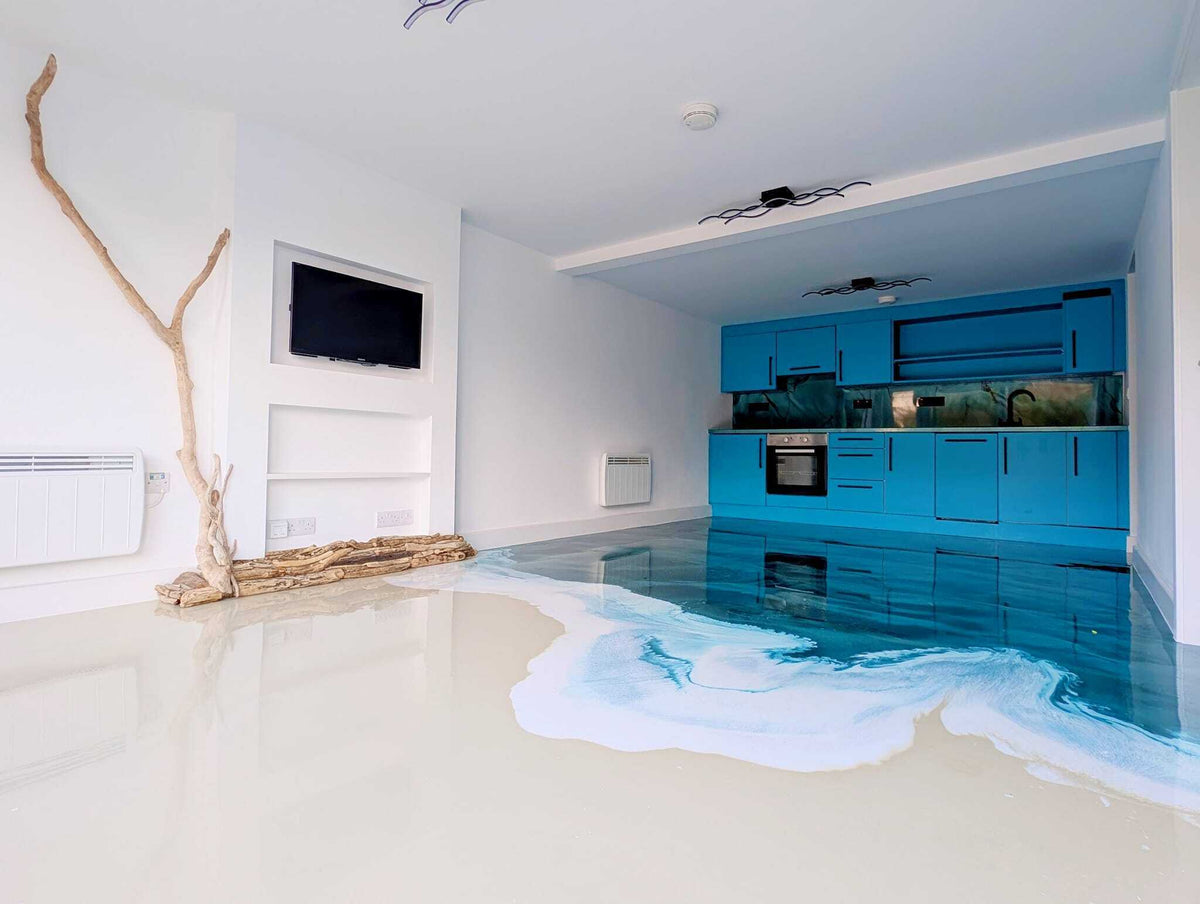
Epoxy floor coating systems are transforming spaces across America. In 2026, these high-performance coatings offer unmatched durability and incredible design options for homes and businesses. They are a chemical reaction. Epoxy resin and a hardener combine to create a tough polymer layer. This layer protects against chemicals, impacts, and heavy wear. It is a smart investment for any property owner.
| Feature | Description |
| Material | Two-component epoxy resin and hardener |
| Application | Coated over concrete substrates |
| Resistance | Abrasion, impact, chemicals, moisture |
| Design Options | Metallic, flake, solid colors, 3D effects |
| Curing Time | Varies by product, critical for adhesion |
| VOCs | Lower in water/solvent-based options |
| Maintenance | Easy cleaning, seamless surface |
Metallic Epoxy Floors: Colors and Effects
Metallic epoxy floors are a showstopper. They use special pigments to create a deep, shimmering look. Think of molten metal or swirling galaxies right on your floor. This effect is achieved by carefully guiding the metallic pigments as the epoxy cures. It adds a luxurious, dynamic feel to any room, from living areas to showrooms.
The visual depth of metallic epoxy is truly captivating. It transforms a simple concrete slab into a piece of art.
Flake Epoxy Flooring: Durability and Style
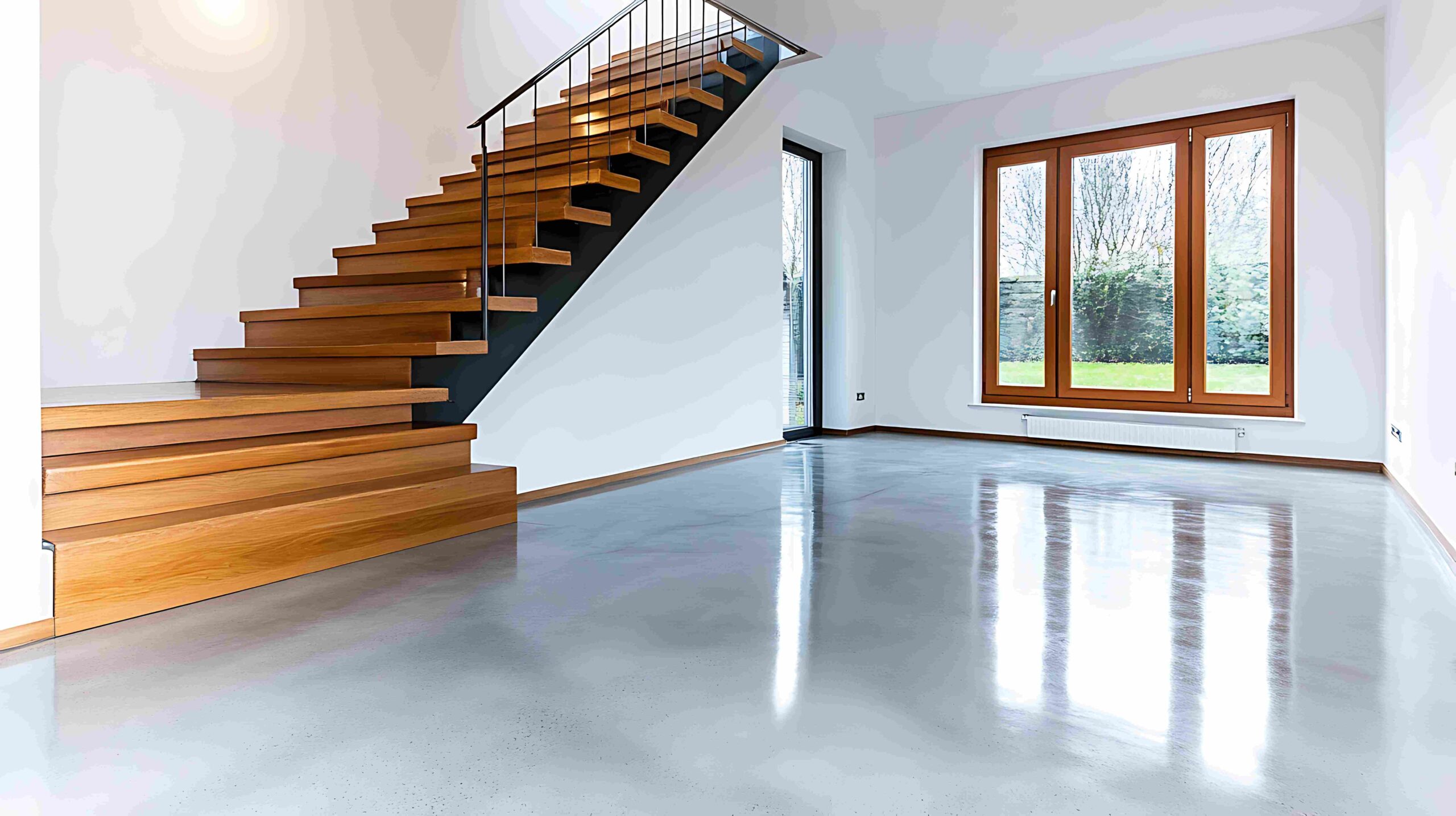
Flake epoxy flooring, also known as chip systems, adds both toughness and visual interest. Tiny vinyl or polymer flakes are scattered into the wet epoxy. This not only hides minor imperfections but also improves slip resistance. It is a popular choice for garages and workshops where both looks and function are important. The speckled appearance is modern and practical.
Read also: Ceramic Tile Flooring: The Wood Look Without the Worry
Solid Color Epoxy Floors for Garages
For a clean, uniform look, solid color epoxy floors are ideal. They provide a high-gloss finish in virtually any color imaginable. This makes them perfect for modern garages or basements. A solid color epoxy can make a space feel brighter and larger. It offers a sleek, minimalist aesthetic that is easy to maintain.
DIY Epoxy Kits: Application Tips
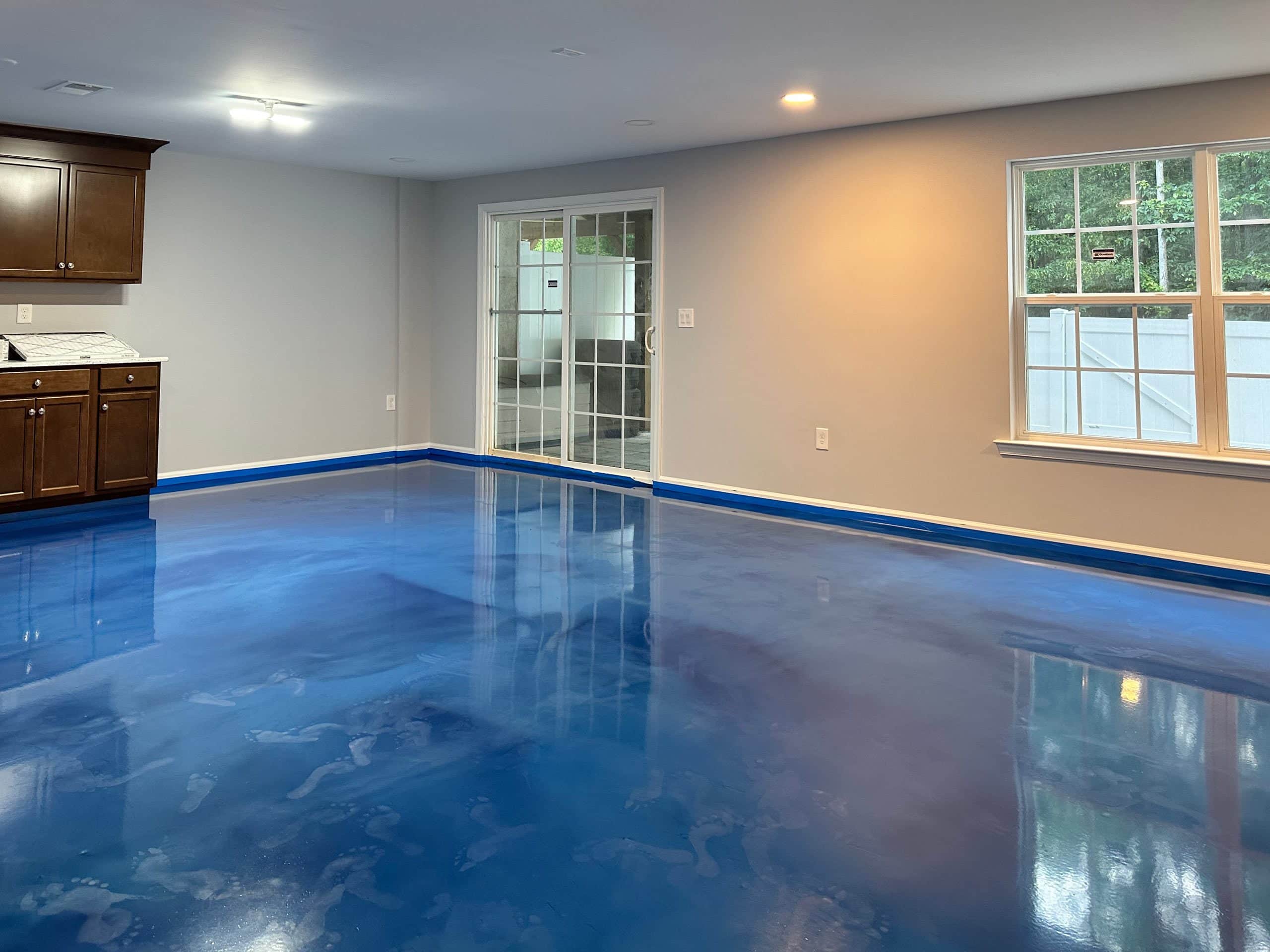
Many homeowners choose DIY epoxy floor kits for their projects. These kits come with pre-measured components. Proper surface preparation is absolutely key for DIY success. This means cleaning and etching the concrete thoroughly. Follow the kit’s instructions precisely for the best results. A good primer coat can also improve adhesion significantly.
Professional Epoxy Installation Benefits
While DIY kits are available, professional epoxy floor installation ensures top quality. Professionals have the tools and expertise for perfect surface preparation. They understand the chemical reactions and curing times. This guarantees a durable, long-lasting finish. It also saves you time and potential costly mistakes.
Epoxy vs. Polyaspartic Coatings
Polyaspartic coatings are often compared to epoxy. They offer similar durability but cure much faster, sometimes in hours. This makes them ideal for quick turnaround projects. However, epoxy flooring systems generally provide a thicker, more robust protective layer. The choice depends on your project’s needs and timeline.
Epoxy Floor Maintenance Made Simple
One of the biggest advantages of epoxy floors is their ease of maintenance. The seamless, non-porous surface prevents spills from soaking in. Cleaning is as simple as sweeping and mopping with mild detergent. This significantly reduces dust and allergens. It keeps your space looking its best with minimal effort.
Commercial Epoxy Flooring Solutions
In commercial settings, epoxy floor coating systems are essential. They stand up to heavy foot traffic and equipment. Their chemical resistance protects against spills common in workshops or labs. The reflective finishes can also improve lighting efficiency. This leads to energy savings and a more pleasant work environment.
The Verdict: Epoxy Floors Are a Smart Investment
Epoxy floors are more than just a coating; they are a performance upgrade for your concrete. In 2026, the technology offers even more benefits, from faster cures to eco-friendly options. Whether you choose a DIY kit or professional installation, epoxy provides a durable, beautiful, and easy-to-maintain surface. Consider it for your garage, basement, or commercial space. You can find more information on flooring options at this link. For specific product details, check out this resource. It is a practical choice that adds real value to your property.
Your 3-Step Action Plan for Epoxy Flooring
Stop dreaming about that perfect floor and start planning today. Here is your straightforward action plan.
Step 1: Prepare Your Substrate
Concrete must be clean, dry, and free of cracks or grease. Use a concrete grinder or a chemical etch to open the pores for maximum adhesion.
Skip this step and your epoxy will peel within months. Invest the time here for a floor that lasts years.
Step 2: Choose Your System
For garages, a 100% solids epoxy with a flake broadcast gives you durability and slip resistance. For living spaces, a metallic or solid color epoxy creates a sleek, modern look.
Water-based epoxies are easier for DIY but less durable. Know your traffic level before you buy.
Step 3: Apply with Patience
Mix the resin and hardener exactly as directed and work in small sections. Use a roller with a medium nap for even coverage and a spike roller to release air bubbles.
Apply a clear topcoat for UV protection and extra gloss. Cure time varies from 24 hours to 7 days – don’t rush it.
Frequently Asked Questions
Can I apply epoxy over an existing painted floor?
No, paint must be completely removed for epoxy to bond properly. Grinding or sanding down to bare concrete is the only reliable method.
How long does an epoxy floor really last?
A properly installed epoxy floor can last 10 to 20 years in a garage or 5 to 10 years in high-traffic commercial spaces. Regular cleaning and avoiding harsh impacts extend its life.
Is epoxy flooring slippery when wet?
Standard high-gloss epoxy can be slippery, but adding a slip-resistant additive or using a flake system improves traction significantly. Always test your chosen finish with water before committing.
Epoxy flooring is not just a trend; it is a proven, durable solution that adds real value to your home. You now have the knowledge to choose and install a system that fits your space and budget.
Your next step is to measure your area, check your concrete condition, and pick the epoxy system that matches your lifestyle. Start with a small test patch to build confidence.
Imagine walking into a garage that looks like an art gallery or a living room that reflects light like a calm lake. That future is just a few weekend projects away.
