

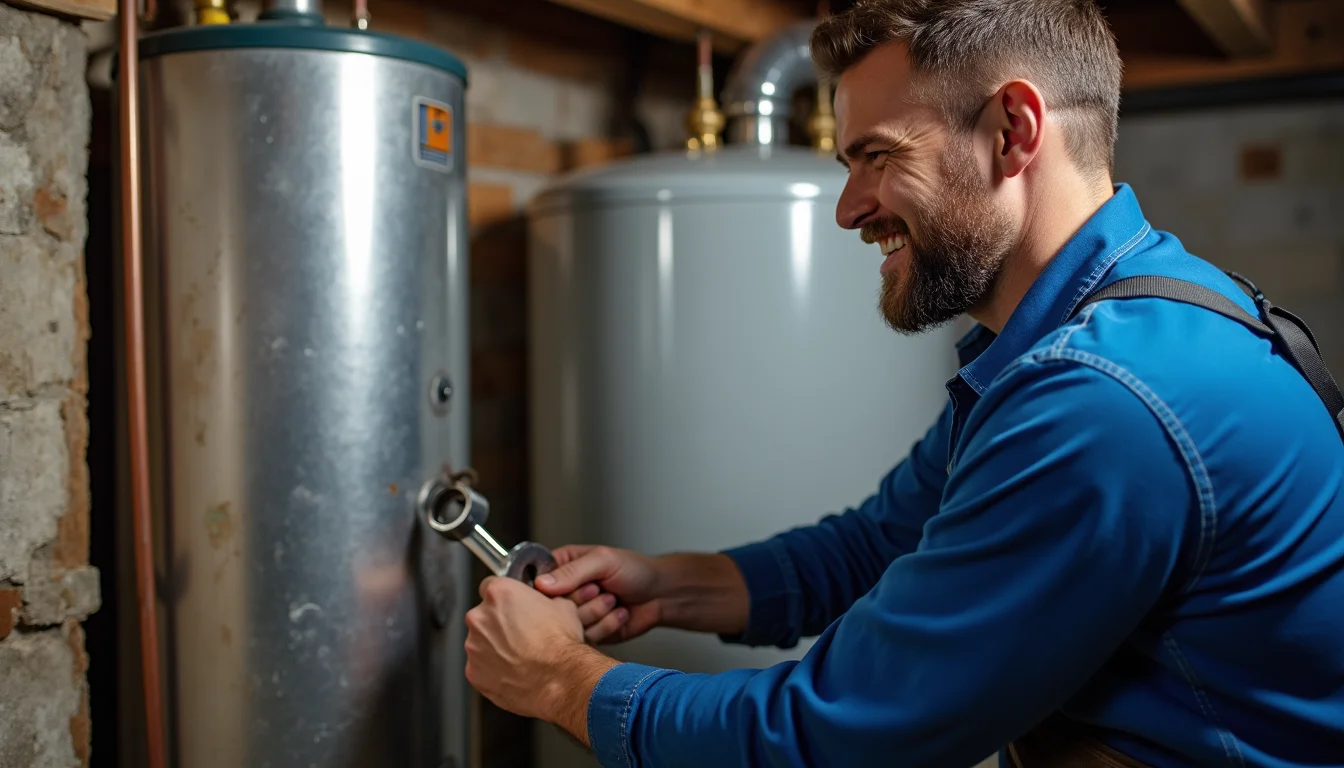
Is your water heater making strange noises or not giving you enough hot water? These are clear signs that your water heater is failing, and you don’t want to be caught without hot water on a cold morning. Replacing it before it breaks down completely can save you from a messy flood and an emergency call to a plumber.
In 2026, the cost of water heater replacement ranges from about $882 to $1,815 for a standard tank model, but prices can go higher depending on the type and size you choose. Understanding these costs and knowing what to look for in a new unit will help you make a smart decision for your home and your budget.
When to Replace Your Water Heater: Signs and Sizing Tips
Most tank water heaters last 8 to 12 years. If yours is older than that and you notice rust around the connections or water pooling on the floor, it’s time to start shopping. Other signs of water heater failure include banging or popping noises from sediment buildup, and inconsistent water temperature where the water goes from hot to cold too quickly.
Choosing the right size is critical. A 1-2 person household typically needs a 30 to 40 gallon tank, while a family of 5 or more may need 50 to 80 gallons. The cost also varies: smaller tanks run $430 to $2,100, and larger ones $530 to $3,100. Always consider your peak hour demand – the busiest time for hot water use in your home – to avoid running out mid-shower.
Introduction
Replacing your water heater doesn’t have to be a headache. This guide will walk you through the process step-by-step.
We focus on practical, real-world solutions for homeowners. Get ready for reliable hot water again.
| Estimated Time | Cost (USD) | Difficulty Level |
|---|---|---|
| 4-8 hours | $882 – $1,815+ | Moderate |
Necessary Materials
- New water heater unit
- Plumbing tools (wrenches, pipe cutter)
- Pipe thread sealant or tape
- Water heater drain pan
- Electrical or gas supply connectors
- Bucket and towels for spills
- Safety glasses and gloves
The Definitive Step-by-Step
- Step 1: Turn Off Power/Gas – Locate the breaker or gas valve for the water heater. Ensure it is completely off.
- Step 2: Shut Off Water Supply – Find the cold water inlet valve and close it tightly.
- Step 3: Drain the Tank – Connect a hose to the drain valve and run it to a safe location. Open the valve.
- Step 4: Disconnect Lines – Carefully disconnect the hot and cold water lines. Also, disconnect gas or electrical connections.
- Step 5: Remove Old Unit – With help, carefully move the old water heater out of the way.
- Step 6: Position New Unit – Place the new water heater in the drain pan. Ensure it is stable.
- Step 7: Connect New Lines – Attach the hot and cold water lines using sealant. Connect gas or electrical supply.
- Step 8: Fill the Tank – Open the cold water valve and let the tank fill. Check for leaks at connections.
- Step 9: Turn On Power/Gas – Restore power or gas to the new unit. Follow manufacturer instructions for startup.
- Step 10: Test Hot Water – Run hot water at a faucet to ensure it’s working correctly.
Common Execution Mistakes
- Forgetting to turn off the power or gas supply before starting.
- Not properly draining the old tank, leading to heavy lifting and spills.
- Using incorrect pipe fittings or sealants, causing leaks.
Signs Your Water Heater Needs Replacement
Water heater leaks
Persistent leaks from the tank or connections are a clear sign of failure. Look for puddles or moisture around the base.
Water heater corrosion
Visible rust or corrosion on the tank exterior or pipe connections indicates internal damage. This often means the tank is compromised.
Water heater noises
Unusual banging, popping, or rumbling sounds often point to sediment buildup. This reduces efficiency and can lead to failure.
Inconsistent water temperature
If you’re experiencing fluctuating hot water temperatures, the heating element or thermostat may be failing. This impacts daily comfort.
Cost of Water Heater Replacement in 2026
Cost of Water Heater Replacement in 2026
The average cost for replacing a standard tank water heater in 2026 is between $882 and $1,815. Tankless models can cost significantly more, often exceeding $4,500. This price includes the unit and professional installation.
Tank vs. Tankless Water Heater Comparison
Tank vs. Tankless Water Heater Comparison
Tank water heaters are cheaper upfront and simpler to install. However, they can run out of hot water and are less energy-efficient. Tankless models provide endless hot water and save energy but have a higher initial cost.
How to Size a New Water Heater
How to Size a New Water Heater
Sizing depends on your household’s peak hour demand. A 1-2 person home might need a 30-40 gallon tank. Larger families (5+ people) often require 50-80 gallons. Consult resources like the Department of Energy for precise calculations. Sizing Guide.
Professional Water Heater Installation Services
Professional Water Heater Installation Services
Major retailers like Lowe’s offer professional installation. This service includes delivery and removal of your old unit. It ensures the new heater is installed correctly and safely. Installation Services.
Energy-Efficient Water Heater Rebates
Energy-Efficient Water Heater Rebates
Check for local and federal rebates on energy-efficient models. These incentives can significantly reduce the overall cost of a new, high-efficiency water heater. Your local plumber can provide details on available programs.
Water Heater Lifespan and Maintenance Tips
Water Heater Lifespan and Maintenance Tips
Standard tank water heaters typically last 8-12 years. Tankless models can last over 20 years. Regular maintenance, like flushing the tank to remove sediment, can extend its life.
Types of Water Heaters: Electric, Gas, and Tankless
Electric water heaters are common and work well for smaller households. Natural gas models are also popular and can be more efficient in some areas.
Read also: What To Do When Your Pipe Bursts at 3 AM: Emergency Plumber Tips
Tankless water heaters provide hot water on demand, saving energy but costing more upfront. Each type has pros and cons based on your needs and budget. Types of Water Heaters.
Read also: Your Water Heater Is Working Too Hard? How a Water Softener Saves It
Smart Tips for Your Water Heater Replacement
What to Avoid
- Don’t ignore small leaks. They often mean the tank is failing and will get worse.
- Avoid buying a unit that’s too small. You’ll run out of hot water during back-to-back showers.
Step-by-Step Replacement Tips
- Measure your current unit’s height and width before shopping. This ensures the new one fits the same space.
- Check your home’s energy source. Gas and electric models have different installation requirements.
- Look for Energy Star certified models. They can save you up to $100 per year on utility bills.
Frequently Asked Questions
How do I know if my water heater needs replacement?
Look for signs like rust-colored water, strange noises, or a unit over 10 years old. These indicate it’s time for a new one.
Can I install a water heater myself?
DIY installation is risky and often violates local codes. Professional installation ensures safety and warranty validity.
What size water heater do I need?
Base the size on your household’s peak hour demand. A family of four typically needs a 50-gallon tank.
Choosing the right water heater replacement protects your home and gives you reliable hot water. You now have the knowledge to make a confident decision.
Next, get at least three quotes from licensed plumbers in your area. Compare prices and ask about energy rebates to save more.
Imagine never running out of hot water again. A modern, efficient unit makes your daily routine smoother and your home more valuable.
