


You pull into your driveway after a long day, but you can’t get into your own home because of one small step. That’s the reality for many people using wheelchairs or walkers. A portable wheelchair ramp can fix that problem today, not next week.
Forget expensive home renovations or waiting for contractors. A good ramp gives you back your freedom to come and go as you please. It’s a simple tool that can change your daily life for the better.
Folding, Telescopic, or Rubber: Which Portable Ramp Fits Your Life?
Not all portable ramps are the same. You need to match the ramp to your specific door, vehicle, or curb. Folding wheelchair ramps are great for trunks and vans because they fold up small. Telescopic ramps adjust in length, which helps you get the right slope for different heights.
For small thresholds, a rubber threshold ramp is cheap and easy to use. It won’t slide around and can handle up to 600 pounds. If you need to get over a curb outside, a curb ramp with a lip that grips the ground is safest.
Always check the weight limit. Most portable ramps hold 600 to 800 pounds, but some heavy-duty models go up to 1000 pounds. Also look for a non-slip surface and locking pins that keep the ramp from folding while you use it. These features are not extras; they are safety musts.
Navigating Barriers: The Essential Portable Wheelchair Ramp
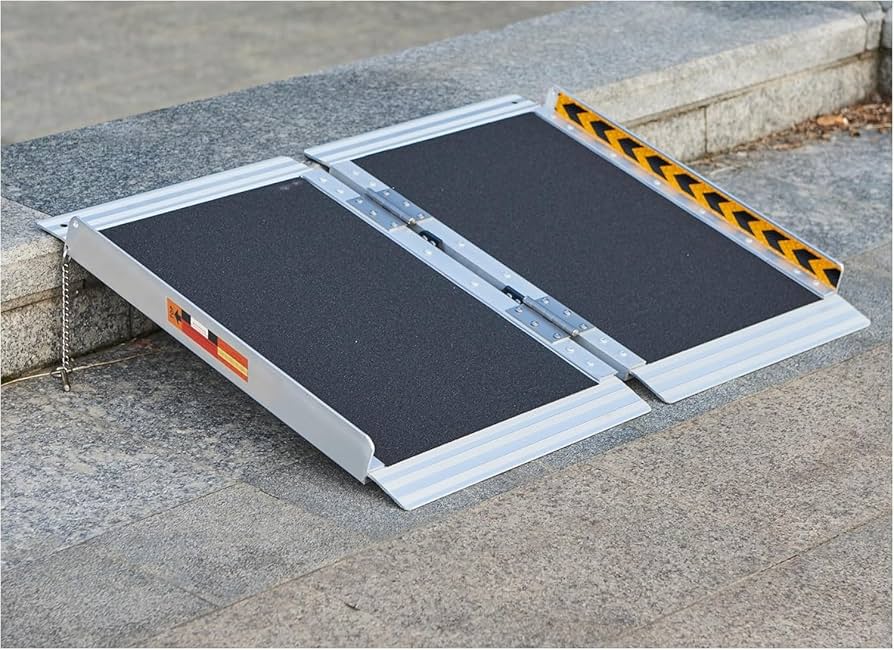
Portable wheelchair ramps are vital tools for independence. They bridge gaps that prevent easy movement for those using wheelchairs or mobility aids. In 2026, these ramps focus on strong, light materials like aircraft-grade aluminum. This makes them durable and easy to carry.
Load capacity, ramp length for proper slope, and width are key. Good traction is a must for safety in any weather. Look for ramps with handles and non-slip features for secure use. These ramps significantly improve daily life and access.
| Feature | Specification |
|---|---|
| Material | Aircraft-grade aluminum, reinforced polymers |
| Load Capacity | 600 lbs – 1000+ lbs |
| Slope Guideline | Max 1:12 (ADA for permanent) |
| Key Features | Carrying handles, locking mechanisms, non-slip surfaces |
| Purpose | Safe access to homes, vehicles, public spaces |
Folding Wheelchair Ramp for Easy Storage
A folding wheelchair ramp is a top choice for convenience. It collapses into a compact size, perfect for storing in a car trunk or closet. This design ensures you can deploy it quickly when needed, without taking up much space.
The ability to fold makes it incredibly practical for everyday use and travel.
Telescopic Wheelchair Ramp for Adjustable Length
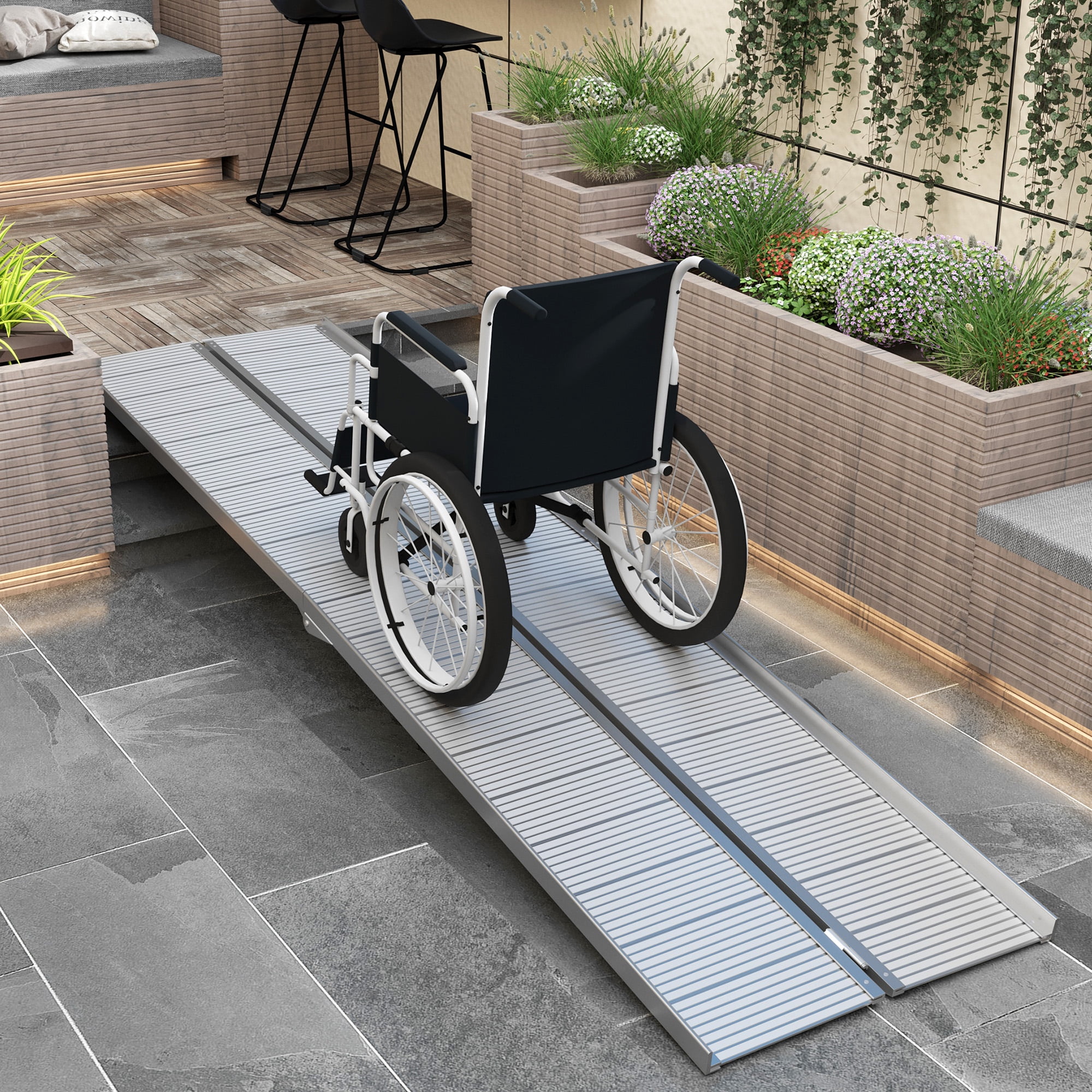
For varied needs, a telescopic wheelchair ramp offers flexibility. It extends to the required length, allowing you to manage different heights and distances. This adjustable feature is crucial for adapting to various environments.
Ensure the locking mechanism is secure when extended. This prevents accidental collapse and ensures user safety. Telescopic ramps are excellent for situations where fixed-length ramps are impractical.
Rubber Wheelchair Ramp for Vehicle Access
Rubber wheelchair ramps are ideal for overcoming small vertical changes, like thresholds or vehicle entry points. Their durable rubber construction provides excellent grip and stability. They are often used as a permanent or semi-permanent solution for specific access points.
These ramps are particularly effective for car and van access. They absorb shock and reduce noise, offering a smoother transition. Always check the weight rating for your specific vehicle needs.
Threshold Ramp for Doorway Transitions
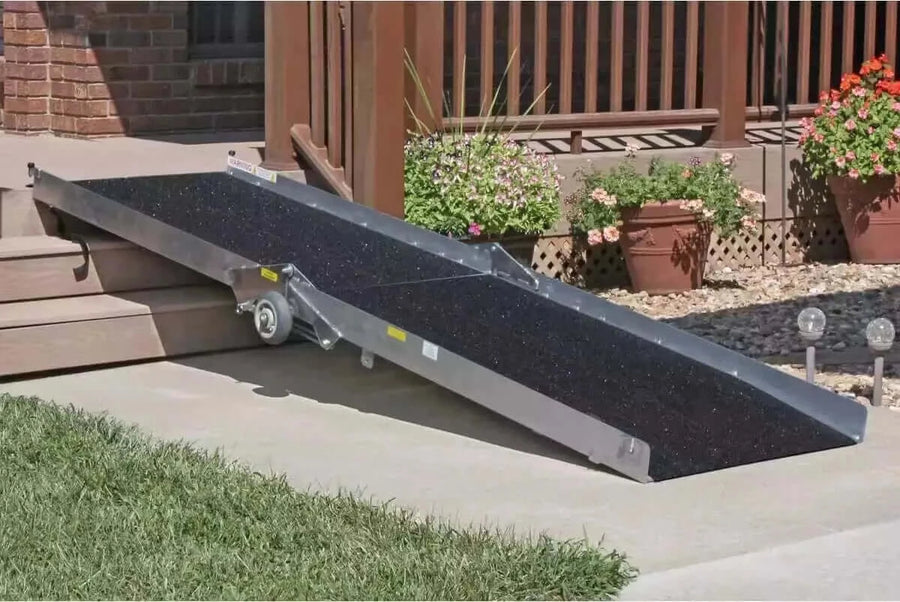
A threshold ramp is designed for interior doorways. It sits at the bottom of a door frame, eliminating that small lip or step. This makes it much easier to roll over without assistance.
Many threshold ramps are made of durable rubber or aluminum. They are typically low-profile and easy to install. This simple addition can make a huge difference in home accessibility.
Curb Ramp for Sidewalk Navigation
Navigating sidewalks becomes easier with a portable curb ramp. These ramps allow wheelchairs to ascend curbs smoothly and safely. They are lightweight and can be placed temporarily where needed.
Look for a curb ramp with a good weight capacity and a textured surface for traction. This ensures a secure transition from the street to the sidewalk. They are essential for independent mobility in urban environments.
Mobility Ramp for Home Entryways
For primary home entry, a sturdy mobility ramp is essential. While permanent ramps offer the best solution, portable options can serve as excellent temporary or adaptable access. They ensure you can enter and exit your home with confidence.
Consider the rise of your entryway. The ramp’s length will determine the slope. A gentler slope is always safer and easier to navigate. This is a crucial piece of equipment for maintaining independence at home.
ADA Compliant Ramp for Public Spaces
When selecting a ramp for public or commercial use, ADA compliance is key. While portable ramps may not always meet permanent ADA standards, understanding the guidelines helps. The recommended slope is typically 1:12 for permanent installations.
Portable solutions can supplement accessibility in temporary event spaces or businesses. Always ensure the ramp provides a safe and stable surface for all users. This promotes inclusivity and meets legal requirements.
Lightweight Portable Ramp for Travel
For those who travel frequently, a lightweight portable ramp is a game-changer. Made from advanced materials like aluminum alloys, these ramps are easy to carry. They provide access wherever you go.
The portability factor is paramount for maintaining an active lifestyle on the go.
Integrated handles and secure locking systems add to their travel-friendliness. They ensure you are never caught without access, whether visiting friends or exploring new places.
The Future of Accessible Access in 2026
Portable wheelchair ramps have evolved significantly. In 2026, the focus remains on enhanced durability, lighter weight, and user-friendly designs. We are seeing more integrated safety features and improved traction technology.
The market is pushing towards even more robust yet portable solutions. Smart ramp technology is emerging, but for now, the emphasis is on reliable, well-engineered, and affordable accessibility devices. These ramps are not just accessories; they are essential for independence and quality of life.
Your 3-Step Action Plan for Choosing a Portable Wheelchair Ramp
Step 1: Measure Your Needs
Measure the height of the step or threshold you need to overcome. This determines the ramp length you need for a safe slope.
Step 2: Check Weight Capacity
Add the weight of the wheelchair and the user, then choose a ramp rated for at least that amount. Always go for a higher capacity for safety.
Step 3: Inspect the Surface
Look for a ramp with a textured, non-slip surface and raised edges. This prevents slipping in wet conditions and keeps wheels on track.
Frequently Asked Questions
Can I use a portable ramp on grass or gravel?
Yes, but you need a ramp with a wide base and non-slip end plates to prevent sinking. For soft surfaces, consider a track-style ramp for stability.
How do I know if a ramp is long enough?
For every inch of rise, you need at least one foot of ramp length for a safe slope. Measure the height and multiply by 12 to get the minimum length.
Is aluminum or plastic better for a portable ramp?
Aluminum is stronger and lighter, making it ideal for frequent use. Plastic ramps are cheaper but may crack under heavy loads or in cold weather.
Choosing the right portable wheelchair ramp is a decision that directly impacts safety and independence. By focusing on weight capacity, length, and surface texture, you ensure a reliable solution for everyday use.
Now that you know the key factors, measure your doorway or vehicle step and compare with our top-rated models. Your next step is to select a ramp that matches your specific needs and budget.
Imagine the freedom of entering your home or car without assistance. That peace of mind is within reach with the right portable ramp.
